Scripture Meditation: Worship and Reconciliation Go Together

“So when you are offering your gift at the altar, if you remember that your brother or sister has something against you, leave your gift there before the altar and go; first be reconciled to your brother or sister, and then come and offer your gift.”
Matthew 5:23-24

How do we enter into prayer and worship? Self-examination is always helpful, especially if we have a reason to confess a wrong to a friend, colleague, or neighbor.

The monks who instructed novices in prayer typically noted that some distractions were a from God. A distraction may illuminate an area of our lives that requires repentance before we are free to pray.

Self-examination preemptively faces our distractions or failures and gives us a chance to take action before we enter into prayer. And if you don’t have time to pray because you’re busy seeking reconciliation, I trust that this obedience is precious to Jesus.


For Reflection

meditation-for-october-4

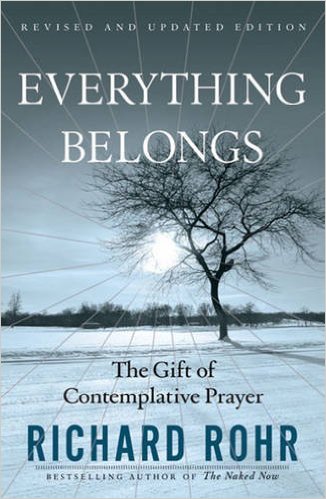
Book of the Month: Everything Belongs

Week One: Surrender to God’s Mercy

everything-belongs-rohrIf everything belongs in our contemplative practice, then we must give up the charade of denial or wearing a mask to hide our flaws and pain. Our only hope will be completely surrendering to God’s mercy.

Once we face our pain, struggles, and failures, we remove ourselves from religious systems that gain their power from setting moral standards that cannot be violated by their members or call for simplistic answers. This is why those who have faced their own dark sides and found God’s mercy are so able to share mercy with others.

This month we’ll look at Richard Rohr’s book Everything Belongs: The Gift of Contemplative Prayer, with quotes this week about the process of exposing and moving beyond the obstacles that keep us from intimacy with God:


*****

“In God’s reign ‘everything belongs,’ even the broken and poor parts. Until we have admitted this in our own soul, we will usually perpetuate expelling systems in the outer world of politics and class. Dualistic thinking begins in the soul and moves to the mind and eventually moves to the streets. True prayer, however, nips the lie in the bud. It is usually experienced as tears, surrender, or forgiveness.”

*****

“In terms of soul work, we dare not get rid of the pain before we have learned what it has to teach us.”

*****

“We do not find our own center; it finds us… We do not think ourselves into new ways of living. We live ourselves into new ways of thinking.”

*****

“It seems that we Christians have been worshipping Jesus’ journey instead of doing his journey.”

*****

“It is much easier to belong to a group than it is to know that you belong to God. Those who firm up their own edges and identity too quickly without finding their center in God and in themselves will normally be the enemies of ecumenism, forgiveness, vulnerability, and basic human dialogue.”

*****

Read more in Everything Belongs


For Reflection

featured-book-october-3

Friday Favorites for Prayer and Writing

Each Friday I share some of my favorite finds related to praying or writing. If I think it could help you pray or write better, then I’ll include it below.

Do you have someone else’s article or post to share? Join the Contemplative Writers Facebook group, comment on today’s post on my Facebook page, or follow me on Twitter (@edcyzewski) to nominate your favorite articles, blog posts, and books by Thursday at noon each week.

The Contemplative Outreach Newsletter

How You React to Facebook Likes Is Linked to Self-Esteem

5 Incredible Apps to Maximize Your Attention Span

On the Theology of Sleep

3 Office Realities That Make It Nearly Impossible to Focus

Don’t forget! Pray, Write, Grow and The Contemplative Writer are both $.99 right now.


Keep the Contemplative Writer Sustainable

The Contemplative writer is ad-free and never shares sponsored content, but it is a lot of work to maintain. We rely on affiliate links from the books we share and the generous donations of our readers. An automated monthly gift as low as $1 per month or a one-time gift of $5 goes a long way to sustaining our mission to provide contemplative prayer resources for our readers.

Learn how your support, through a one-time gift or small monthly gifts can keep this website running: Support Us Today

Scripture Meditation: Waiting on God’s Generousity

Jesus taught in the parable of the vineyard laborers:

“Am I not allowed to do what I choose with what belongs to me? Or are you envious because I am generous?” 
Matthew 20:15, RSV


Envy will dismantle the patience that is growing within us, robbing us of the joy of God’s blessings when they finally come to us. God is generous, but we all experience that generosity in different ways and at different times.

God’s generosity will not spare us seasons of darkness and doubt. It’s possible that waiting helps us view his generosity with greater clarity.


For Reflection

Meditation for August 24


Contemplative Profiles: Brother Lawrence

We best know Brother Lawrence as an unassuming monk who worked hard in a monastery kitchen doing menial chores. It was hardly a step up from his previous occupation in the army, which he only joined because he had grown up in poverty. While serving as a soldier he had a spiritual experience that eventually sent him to a monastery.

Lawrence spent his days contemplating the love of God while washing pots and pan, running errands, and cleaning the kitchen. I have personally benefitted from his writings since I’m the person who washes the dishes in our home, but his example of inviting God to join him in the simplest of tasks is a powerful reminder of how to practice God’s presence today.

This profile in Christian History includes the following quotes from Brother Lawrence:

*****

Lawrence writes, “Men invent means and methods of coming at God’s love, they learn rules and set up devices to remind them of that love, and it seems like a world of trouble to bring oneself into the consciousness of God’s presence. Yet it might be so simple. Is it not quicker and easier just to do our common business wholly for the love of him?”

*****

“We can do little things for God; I turn the cake that is frying on the pan for love of him, and that done, if there is nothing else to call me, I prostrate myself in worship before him, who has given me grace to work; afterwards I rise happier than a king.”

*****

“As often as I could, I placed myself as a worshiper before him, fixing my mind upon his holy presence, recalling it when I found it wandering from him. This proved to be an exercise frequently painful, yet I persisted through all difficulties.”

*****

Read more…


Contemplative Profiles: 13 Female Mystics Who Shaped the Church

The women who led the contemplative movement in the church throughout history and influenced the loving search for God over the centuries often made tremendous sacrifices and suffered a great deal. Some gave up wealthy positions, some suffered significant loss, and many of them actively sought to alleviate the suffering of others, exposing themselves to plagues and misery.

They didn’t necessarily shape the theology that we believe, but they do show us steps we can take in the deeper work of abiding in Christ. Here’s an overview of 13 female mystics from church history, but I have included three highlights below:

*****

Catherine of Genoa wrote about a kind of internal purgatory: “The soul presents itself to God still bound to the desires and suffering that derive from sin and this makes it impossible for it to enjoy the beatific vision of God,” Catherine wrote in her book of revelations. She developed a deep relationship with God which Pope Benedict XVI described as a “unitive life.”

*****

Clare of Assissi worked alongside Francis of Assissi: “Clare’s piety was so profound that her sister, mother and several other female relatives eventually came to live with her and be her disciples in her convent outside Assisi. The group came to be known as the ‘Poor Clares.'”

*****

Angela of Foligno shares the common background of coming from a wealthy family or, in her case, losing family members to death: “Angela then sold her possessions and in 1291 enrolled in the Third Order of St Francis. At 43, Angela had a vision of God’s love while she was making a pilgrimage to the shrine of St. Francis of Assisi.”

*****

Read the rest here…


For Reflection

Consider if there are desires you may need to confess to God today in order to experience greater freedom.


Featured Contemplative Book: The Ragamuffin Gospel

ragamuffin Gospel coverWeek Two: What the Cross Tells Us

Brennan Manning writes that we can make the mistake of turning salvation into a process or transaction when the cross itself is God’s ultimate act of love for us. The cross tells us just how deeply God loves us.

As I’ve read the works of contemplative Christians, I’ve noticed that many of them had their most profound revelations while meditating on the cross. It’s on the cross that God demonstrated his commitment to saving us through a different kind of power that doesn’t resort to force or degrading others. The cross tells us just how far God’s love will go for us.

The cross tells us that God saw a violent, self-centered people and still preferred to sacrifice himself at the mercy of our religious and political institutions rather than demanding the love and honor that is his due.

We are continuing our feature of Manning’s The Ragamuffin Gospel this month where he reflects on the love of God and the meaning of the cross:

*****

“We need a new kind of relationship with the Father that drives out fear and mistrust and anxiety and guilt, that permits us to be hopeful and joyous, trusting and compassionate…

The gospel of grace calls us to sing of the everyday mystery of intimacy with God instead of always seeking for miracles or visions. It calls us to sing of the spiritual roots of such commonplace experiences as falling in love, telling the truth, raising a child, teaching a class, forgiving each other after we have hurt each other, standing together in the bad weather of life, of surprise and sexuality, and the radiance of existence.” Page 77-78

*****

“In his monumental work The Crucified God, Jürgen Moltmann writes, ‘We have made the bitterness of the cross, the revelation of God in the cross of Jesus Christ, tolerable to ourselves by learning to understand it as a necessity for the process of salvation.’” Page 108

*****

“Do you really accept the message that God is head over heels in love with you? I believe that this question is at the core of our ability to mature and grow spiritually. If in our hearts we really don’t believe that God loves us as we are, if we are still tainted by the lie that we can do something to make God love us more, we are rejecting the message of the cross.” Page 165

*****

Keep in Touch

Get our latest blog posts delivered to your inbox or sign up for the weekly contemplative email and receive a free eBook: The Contemplative Writer.


For Reflection

Featured Book June 6 2016 (1)


Featured Contemplative Book: The Ragamuffin Gospel

ragamuffin Gospel coverWeek One: Receiving God’s Love

Author Brennan Manning touches on a mystery that has long been a struggle in my Christian faith: How do I begin to love God?

So much of my evangelical background focuses on emotions and passion, being on fire for God and committing to a relationship with all sincerity. If you aren’t “feeling it,” it’s hard to know what to do next.

I learned the hard way that you can’t learn your way into loving God or make yourself love God out of duty or obligation, because this is what good Christians do.

Manning’s solution is striking, simple, and the best kind of news: we love God because he first loved us (see 1 John 4:19). In fact, the foundation of Christianity, the cross, and healthy Christian religious practice and spirituality is the love of God that preempts all of our best efforts.

While I could recommend several Manning books, including The Furious Longing of God, we’re going to feature his popular book The Ragamuffin Gospel this month:

*****

We must go out into a desert of some kind (your backyard will do) and come into a personal experience of the awesome love of God. Then we will nod in knowing agreement with that gifted English mystic Julian of Norwich, “The greatest honor we can give Almighty God is to live gladly because of the knowledge of his love.”

*****

In essence, there is only one thing God asks of us—that we be men and women of prayer, people who live close to God, people for whom God is everything and for whom God is enough. That is the root of peace. We have that peace when the gracious God is all we seek.

*****

Do you really believe that the Father of our Lord and Savior Jesus Christ is gracious, that He cares about you? Do you really believe that He is always, unfailingly present to you as companion and support? Do you really believe that God is love?

*****

Read more from The Ragamuffin Gospel.


Keep in Touch

Get our latest blog posts delivered to your inbox or sign up for the weekly contemplative email and receive a free eBook: The Contemplative Writer.


For Reflection

Featured Book May 30, 2016

Contemplative Profiles: St. Ignatius of Loyola

Ignatius of Loyola was a former soldier who was known for extraordinary bravery and discipline. After a serious injury left him alone for a long and painful time of recovery, Ignatius read about the life of Jesus and the stories of the saints. He found a new calling for his life and dedicated up to seven hours of his day to prayer.

While praying in solitude, he developed his Spiritual Exercises which formed the foundation of the Jesuits, a spiritual order he founded later in his life along with a group of friends.

The legacy of Ignatius is difficult to untangle. Was he a Catholic mystic on the brink of heresy? Was he a zealous counter-reformer who opposed the Reformation? Where does his legacy of spiritual direction and spiritual practices fit into how we remember him?

Even the Jesuits, whom Ignatius founded, remain divided over his legacy. However, as more Catholics and Protestants discover his work, there’s no doubt that many have benefitted from his emphasis on meditation and awareness throughout the day, such as his use of the Examen. One writer sums up his influence in this way:

“The Spiritual Exercises focus not only on our intellect, but also on our feelings and emotions. It is through all of our senses that we can come to know and experience God in our daily lives.”

Whatever Ignatius would have thought about a Protestant writer leaning so heavily on his spiritual practices today, Christians from every background and denomination can enter into prayer with greater awareness and freedom because of the practices he passed on to us.

Learn more about Ignatian spirituality here.


Paraphrase of the First Foundation of the Spiritual Exercises

The Goal of our life is to live with God forever.
God, who loves us, gave us life.
Our own response of love allows God’s life
to flow into us without limit.

All the things in this world are gifts from God,
Presented to us so that we can know God more easily
and make a return of love more readily.
As a result, we appreciate and use all these gifts of God
Insofar as they help us to develop as loving persons.
But if any of these gifts become the center of our lives,
They displace God
And so hinder our growth toward our goal.

In everyday life, then, we must hold ourselves in balance
Before all of these created gifts insofar as we have a choice
And are not bound by some obligation.
We should not fix our desires on health or sickness,
Wealth or poverty, success or failure, a long life or a short one.
For everything has the potential of calling forth in us
A deeper response to our life in God.

Our only desire and our one choice should be this:
I want and I choose what better leads
To God’s deepening his life in me.

Source: Ignatian Solidarity Network


Reflection

Ask God to deepen his life in you today.