Scripture Meditation: The Intentional Pursuit of God

Praise the Lord! I will thank the Lord with all my heart as I meet with his godly people. How amazing are the deeds of the Lord! All who delight in him should ponder them.
Psalm 111:1-2

How do we become aware of God’s presence in our lives?

First, we prioritize time spent in Christian community, giving thanks together for the ways God has been present and provided for us. As our faith struggles or falters, we’ll find encouragement through the stories of God’s faithfulness among others.

Second, we grow in our delight of God by pondering the ways that God has been at work in our lives.

We shouldn’t be surprised that we struggle to see God at work if we don’t take time to ponder his presence each day.


For Reflection

meditation-for-october-16

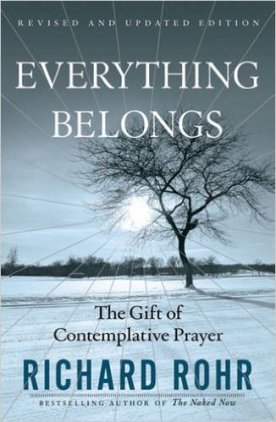
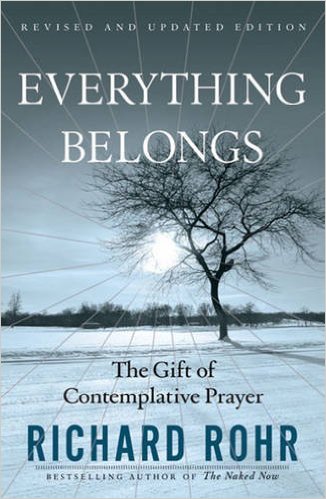
Book of the Month: Everything Belongs

everything-belongs-rohrWeek Two: Replacing Illusion with Reality

In his book Everything Belongs, Richard Rohr writes about the great surrender that must take place before we can find God and our true selves in prayer.

He is quick to note that God is already present. In fact, we cannot escape God’s presence but we can obscure it or overlook it. Our illusions about ourselves or about God can get in the way.

Therefore the great goal of every spiritual practice is to help us move past our illusions, distractions, and oversimplified answers so that we can be truly present for God.


*****

“We have no real access to who we really are except in God. Only when we rest in God can we find the safety, the spaciousness, and the scary freedom to be who we are, all that we are, more than we are, and less than we are. Only when we live and see through God can ‘everything belong.’ All other systems exclude, expel, punish, and protect to find identity for their members in ideological perfection or some kind of ‘purity.’”

*****

“We cannot attain the presence of God because we’re already totally in the presence of God. What’s absent is awareness. Little do we realize that God is maintaining us in every breath we take.”

*****

“All spiritual disciplines have one purpose: to get rid of illusions so we can be present.”

*****

“When we look at the questions, we look for the opening to transformation. Fixing something doesn’t usually transform us. We try to change events in order to avoid changing ourselves. We must learn to stay with the pain of life, without answers, without conclusions, and some days without meaning. That is the path, the perilous dark path of true prayer.”

*****

“When we avoid darkness, we avoid tension, spiritual creativity, and finally transformation. We avoid God, who works in the darkness—where we are not in control! Maybe that is the secret: relinquishing control.”

*****

Read more in Everything Belongs


For Reflection

featured-book-october-10

Scripture Meditation: Worship and Reconciliation Go Together

“So when you are offering your gift at the altar, if you remember that your brother or sister has something against you, leave your gift there before the altar and go; first be reconciled to your brother or sister, and then come and offer your gift.”
Matthew 5:23-24

How do we enter into prayer and worship? Self-examination is always helpful, especially if we have a reason to confess a wrong to a friend, colleague, or neighbor.

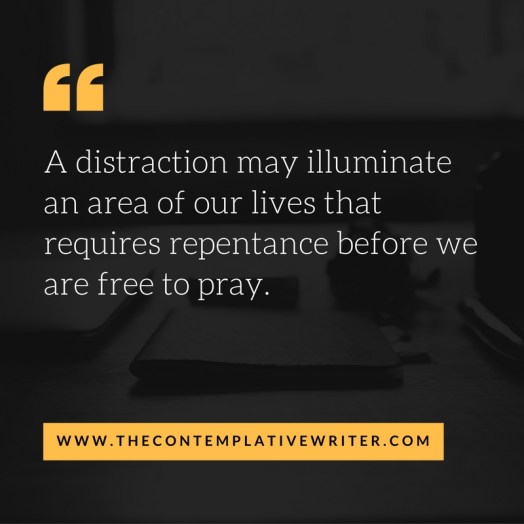
The monks who instructed novices in prayer typically noted that some distractions were a from God. A distraction may illuminate an area of our lives that requires repentance before we are free to pray.

Self-examination preemptively faces our distractions or failures and gives us a chance to take action before we enter into prayer. And if you don’t have time to pray because you’re busy seeking reconciliation, I trust that this obedience is precious to Jesus.


For Reflection

meditation-for-october-4

Book of the Month: Everything Belongs

Week One: Surrender to God’s Mercy

everything-belongs-rohrIf everything belongs in our contemplative practice, then we must give up the charade of denial or wearing a mask to hide our flaws and pain. Our only hope will be completely surrendering to God’s mercy.

Once we face our pain, struggles, and failures, we remove ourselves from religious systems that gain their power from setting moral standards that cannot be violated by their members or call for simplistic answers. This is why those who have faced their own dark sides and found God’s mercy are so able to share mercy with others.

This month we’ll look at Richard Rohr’s book Everything Belongs: The Gift of Contemplative Prayer, with quotes this week about the process of exposing and moving beyond the obstacles that keep us from intimacy with God:


*****

“In God’s reign ‘everything belongs,’ even the broken and poor parts. Until we have admitted this in our own soul, we will usually perpetuate expelling systems in the outer world of politics and class. Dualistic thinking begins in the soul and moves to the mind and eventually moves to the streets. True prayer, however, nips the lie in the bud. It is usually experienced as tears, surrender, or forgiveness.”

*****

“In terms of soul work, we dare not get rid of the pain before we have learned what it has to teach us.”

*****

“We do not find our own center; it finds us… We do not think ourselves into new ways of living. We live ourselves into new ways of thinking.”

*****

“It seems that we Christians have been worshipping Jesus’ journey instead of doing his journey.”

*****

“It is much easier to belong to a group than it is to know that you belong to God. Those who firm up their own edges and identity too quickly without finding their center in God and in themselves will normally be the enemies of ecumenism, forgiveness, vulnerability, and basic human dialogue.”

*****

Read more in Everything Belongs


For Reflection

featured-book-october-3

God Loves Imposters

Healthy spirituality and writing doesn’t require particular accomplishments or milestones in order to be accepted. While the fear of failing or being exposed as an imposter can drive us to do excellent work, we won’t find the peace of God or develop a healthy relationship with our work over the long term with that driving us. .

Christian spirituality teaches us that we are already loved by God, whether or not we are exposed as imposters. In fact, John focused his ministry on repentance because exposing our failures is the only path to freedom. We have to face our worst fears of being imposters and surrender ourselves to the generous, forgiving love of God.

The following article on the imposter syndrome offers some helpful tools for identifying imposter syndrome and ways to manage it.

*****

Studies show impostor syndrome is related to anxiety and intense fear of failure. So you race to keep up the facade… but when you work hard to make sure you’re not found out, it only reinforces the impostor belief.
You fooled them again. But next time you might not be so lucky.

*****

But now not only are you feeling bad and overworking but you’re also alone. You can’t tell anyone your “secret.” You feel like you can’t ask for help because you’ll look incompetent.
In the end, it’s exhausting. Working hard, afraid of being “found out” and not being able to turn to anyone is enormously stressful. Eventually you may see self-sabotage as the only way out.

*****

Focusing on improvement means you know you’re not perfect but you know you can get better. With that attitude, you can. And if you fail, hey, you learned something.
But focusing exclusively on performance goals means anything less than perfect is death. That’s incredibly stressful and pushes you to do things that are extreme, unhealthy and maybe unethical.

*****

Swarthmore professor Barry Schwartz says “good enough” is the secret to happiness and neuroscience studies agree.

Instead of doing everything to keep up this illusion that you’re perfect, accept that you’re not. Don’t build self-confidence, build self-compassion. Forgive yourself when you screw up. Research shows increasing self-compassion has all the benefits of self-esteem — but without the downsides.

*****

Read more…


Keep the Contemplative Writer Sustainable

The Contemplative writer is ad-free and never shares sponsored content, but it is a lot of work to maintain. We rely on affiliate links from the books we share and the generous gifts of our readers. An automated monthly gift as low as $1 per month or a one-time gift of $5 goes a long way to sustaining our mission to provide contemplative prayer resources for our readers. Thank you!

Choose a recurring monthly donation:

support-patreon-orange

Make a one-time gift via PayPal (credit cards accepted!)


Donate Now Button

Learn more about how to support us.


Featured Contemplative Book: 100 Days in the Secret Place

100-days-secret-placeWeek Three: Turning to God First

Whether you are encouraged or discouraged, living in holiness or living in sin, the first step in spirituality is always the same: turn to God. In fact, Jeanne Guyon suggests that fighting temptations directly is the sure way to lose.

How is this so? Because temptations flee in the presence of God. As we abide in Christ, we are protected and renewed.

Gene Edwards, author of Divine Romance, has gathered together key writings from three notable Christian mystics from the seventeenth century: 100 Days in the Secret Place: Classic Writings from Madame Guyon, Francois Fenelon, and Michael Molinos on the Deeper Christian Life by Gene Edwards. Here are several quotes to consider today:

*****

“The more clearly you see your true self, the clearer you also see how miserable your self-nature really is; and the more you will abandon your whole being to God. Seeing that you have such a desperate need of Him, you will press toward a more intimate relationship with Him.”

*****

“If you attempt to struggle directly with these temptations, you will only strengthen them; and in the process of this struggle, your soul will be drawn away from its intimate relationship with the Lord. You see, a close, intimate relationship to Christ should always be your soul’s only purpose.”

*****

“What does a little child do when he sees something that frightens him or confuses him? He doesn’t stand there and try to fight the thing. He will, in fact, hardly look at the thing that frightens him. Rather, the child will quickly run into the arms of his mother. There, in those arms, he is safe. In exactly the same way, you should turn from the dangers of temptation and run to your God!”

*****

“Once the heart has been gained by God, everything else will eventually take care of itself. This is why He requires the heart above all else.”

*****

Learn more here.

Keep in Touch

Get our latest blog posts delivered to your inbox or sign up for the weekly contemplative email and receive a free eBook: The Contemplative Writer.


For Reflection

Featured Book May 16, 2016

Scripture Meditation: Trusting God to Care for Our Souls


“To you, O LORD, I lift up my soul; my God I put my trust in you; . . .”
Psalm 25:1

Meditation

I bible-1440953-1279x852have long wondered what it means to “lift up my soul” to God, but I recently read one suggestion that “lifting up” our souls to God is a surrender. Lifting up my soul is a handing over of control to God.

A weary soul is consumed with the cares of this world, distracted by entertainment and greed, or caught up in pleasing others. Perhaps we “lift up” our souls to others each day as we hope they’ll notice us, affirm us, or meet a deep need.

Trust is no small matter. Is God worthy of our trust? Will God show up if we lift up our souls to him?

The practice of contemplation opens our souls to the presence of God. It’s a lifting of our souls to God, inviting him to care for us and our souls. Over time, we will learn to place greater trust in God, but we must begin by lifting up our souls in faith and expectation.


Reflection

How is your soul today?

Are you lifting up your soul to something or someone other than God?

What does it look like to trust God with your soul


Announcing The Contemplative Writer: Soul Care and Spiritual Practices for Writers

cropped-the-contemplative-writer-twitter-header.jpg

Where does your identity come from?

I’m going to guess that anyone attracted to a site called The Contemplative Writer looks to their faith and their writing as important parts of their identities. Writing is extremely fulfilling and can serve others, but it will fail anyone who looks to it as as an identity.

The foundational principle for everything that follows at The Contemplative Writer is this: Your identity is determined by God’s love for you, and you’ll only find that identity by caring for your soul. While there are many ways to care for your soul, the goal of this website is to lay a strong foundation of Christian contemplative spiritual practices so that you can pray and write with a healthy, well-grounded soul.

Richard Rohr of the Center for Action and Contemplation says that he focuses on 80% contemplation in order to guide 20% of his action. Our actions (or writing) will be rooted in love and purpose when they are grounded in an identity established by God through our contemplation.

For those of us who write, our identities can be particularly fragile. While anyone can benefit from this website in the weeks and months to come, writers of faith will especially benefit from the practices and mindsets presented in daily posts and weekly newsletters.

If your identity is dictated by outside voices and circumstances, there’s every reason to believe that your soul will suffer and your actions will veer in any number of wrong turns. At the contemplative writer the content I share each day follows Rohr’s 80/20 approach: 80% guiding contemplation and 20% guiding writing practice. If we can use the tools of Christian spirituality to help you connect with God and to care for your soul, I believe we’ll be in a much healthier place for our writing.

Each week you’ll find the following brief blog posts (100-300 words) to aid your contemplative journey:

  • Monday: Quotes from a book of the month on contemplative prayer.
  • Tuesday: Scripture meditation.
  • Wednesday: Featured article or book on contemplative prayer or writing practices.
  • Thursday: Contemplative profile or history.
  • Friday: A list of prayer or writing links.
  • Saturday: Guest writers and spiritual directors (coming soon)

Each month you can also expect a weekly newsletter that will soon be adapted into a podcast as well.

Finally, a small disclaimer…

I have not set up this website because I am the most accomplished or knowledgable contemplative Christian. I do not view myself as an expert. I am merely someone who has immersed himself in Christianity since my youth, and the contemplative prayer practices I started learning in the early 2000’s have been the most important, formative, and longest-lasting aspects of my faith. The more I lean into contemplative prayer, the more essential it becomes for my faith and my calling as a writer.

I set up this website because I wanted to immerse myself in contemplative prayer while also sharing my journey with others. I hope that this new venture helps you find space to meet with God, guidance for the road ahead, and rest for your soul as you create and bless others. I’ll share some simple ways you can keep in touch and support us below.

Thank you for visiting!

Ed

Subscribe to daily blog posts via email (Scroll down for the RSS feed link).

email posts

Join our weekly contemplative email list (Get the new eBook The Contemplative Writer for free too!).

subscribe-today-nl

Support us with monthly or one-time gifts (we don’t run ads or sponsored posts).

Monthly gifts (starting at $1/month)

support-patreon-orange

One-time gifts (suggested $5)

Donate Now Button


Check out the contemplative prayer resources page.


For Reflection or Sharing:

Quote for Contemplative writer launch