Featured Article: A Wandering Mind Is an Unhappy Mind

We have many, many ways to avoid being present in the moment. We can interrupt ourselves as often as we like. And now it appears that a Harvard study of happiness and contentment has linked these constant interruptions as detrimental to our happiness.

A wandering mind that isn’t focused or fully present for an activity or task is often an unhappy mind.

This shouldn’t be a surprise to Christians who practice contemplation, as mindfulness and awareness of our thoughts saves us from their tyranny and enables us to trust our worries and concerns with God.

However, it’s still helpful to see how the wisdom of our faith has strong backing from science:

*****

“A recent Harvard study reveals that stray thoughts and wandering minds are directly related to unhappiness. The study discovered that those with constantly wandering minds were less likely to be happy than those able to focus on the tasks at hand.”

*****

“Csikszentmihalyi, often called the grandfather of positive psychology, found that our happiest moments are when we are in the state of flow. In this state, we are highly alert. We are totally focused with one-pointed attention. This focus–this mindfulness of being in the moment–is when true happiness spontaneously arises.”

*****

“Flow allows you to truly and deeply live your life as it unfolds in the here and now. Perhaps this is why the latest research continues to confirm that mindfulness increases happiness–to be mindful is to truly experience life and make the most out of every moment.”

*****
Read more.


Scripture Meditation: Don’t Think Too Hard about It…

“The Lord knows people’s thoughts; he knows they are worthless! Joyful are those you discipline, Lord, those you teach with your instructions.”
– Psalm 94:11-12, NLT

What better motivation to pursue the silence and rest of contemplative prayer than to read that God knows our thoughts are worthless!

While there is a great deal in scripture that praises meditating on scripture and remembering God’s laws, this Psalm offers a reality check for the times when we rely on our own wisdom. Most importantly, we find that even when God sees our inadequacies and failures, he responds with mercy and instruction.

Even when God knows that we will fall short over and over again, he desires to give us the joy of his instruction and discipline. May we find God’s loving direction, even as we discover the folly of our wisdom.

Book of the Month: Finding Grace at the Center

finding-grace-at-centerWeek Two: Transformed in Silence

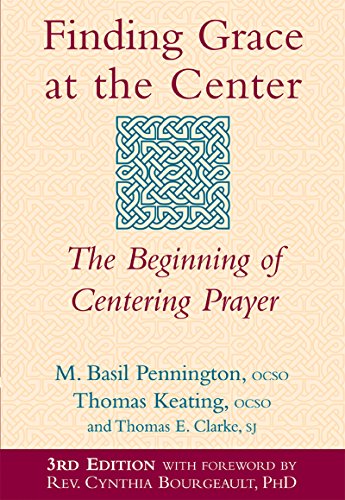
In Finding Grace at the Center: the Beginning of Centering Prayer, a collection of essays by M. Basil Pennington, Thomas Keating, and Thomas E. Clarke, M. Basil Pennington writes about the transformation that comes in the practice of centering prayer.

Perhaps the most surprising aspect of centering prayer for those new to it is the manner in which God transforms our lives in silence. There is no way to measure or evaluate your progress in the moment.

The transformation of our lives happens gradually by faith, much like the way a branch that abides in its vine can grow fruit.


*****

“Perhaps in this prayer we will for the first time really act in pure faith. So often our faith is leaning on the concepts and images of faith. Here we go beyond them to the Object Himself of faith, leaving all the concepts and images behind.”

*****

“If we have lots of thoughts-good, lots of tension is being released; if we have few thoughts-good, there was no need for them… All these are purely accidental; they do not touch the essence of prayer, which goes on in all its purity, whether these be present or not.”

*****

“If we are faithful to this form of prayer, making it a regular part of our day, we very quickly come to discern-and often others discern it even more quickly-the maturing in our lives of the fruits of the Spirit.”

*****

“We begin… to experience the presence of God in all things, the presence of Christ in each person we meet. Moreover, we sense a oneness with them.”

*****

Read more…


For Reflection

featured-book-november-14


Contemplative Profile: Evelyn Underhill

Week Two: Contemplation and Action

Contemplative profiles are back with the help of author and historian Lisa Deam. This month we’re featuring Evelyn Underhill:

In Evelyn Underhill’s later works we see a theme that runs through the history of Christian contemplation: the dance of contemplation and action. Our private prayer life is important. In fact, Underhill says we must each be a “secret child of God.” Yet our prayers also open us to the larger purposes of God. We’re not merely fulfilled; we’re spilled out into the world.

*****

“For it is the self-oblivious gaze, the patient and disciplined attention to God, which deepens understanding, nourishes humility and love; and, by gentle processes of growth, gradually brings the creature into that perfect dedication to His purposes.” (Worship)

*****

“A real man or woman of prayer, then, should be a live wire, a link between God’s grace and the world that needs it . . .” (“Life as Prayer”)

*****

“We are transmitters as well as receivers. Our contemplation and our action, our humble self-opening to God, keeping ourselves sensitive to His music and light, and our generous self-opening to our fellow creatures, keeping ourselves sensitive to their needs, ought to form one life; mediating between God and His world, and bringing the saving power of the Eternal into time.” (Spiritual Life)

*****

Reflection

How can I be both a receiver and a transmitter of God’s love this week?


About Lisa Deam

Lisa Deam writes and speaks about Christian spiritual formation from a historical perspective. She’s the author of A World Transformed: Exploring the Spirituality of Medieval Maps. Visit her on Twitter @LisaKDeam and at lisadeam.com.

Scripture Meditation: Servants Don’t Need to Be in Charge

“Mary responded, ‘I am the Lord’s servant. May everything you have said about me come true.’ And then the angel left her.” Luke 1:38, NLT

How do we live by faith today? Mary faced one of the greatest stretches of faith that anyone could face, and she remained able to fully trust in God’s provision and plan because she knew her place.

As God’s servant, Mary only had to trust what God showed her.

It wasn’t up to Mary to figure out the plan or to provide the means. She didn’t imagine that she was in charge in any way, and with herself entrusted to God’s care, she didn’t have to be worry about what happens next.

Living by faith as the servants of God makes it possible to approach the challenges of each day with a peaceful confidence in God’s provision.

Contemplative Profiles: Evelyn Underhill

Contemplative profiles are back with the help of author and historian Lisa Deam. This month we’re featuring Evelyn Underhill:

Lately I’ve enjoyed getting to know some of the modern contemplatives and mystics. One of these is the Anglo-Catholic writer Evelyn Underhill (1875-1941). Underhill offered scholarly studies on great mystics from the past — she called them giants and heroes. At the same time, she insisted that the life of prayer and contemplation belongs to every ordinary person. No heroism necessary.

Underhill also believed that contemplation belongs to every era — eras of conflict and eras of peace. One of her early books, Practical Mysticism (free on Kindle!), was released at the beginning of World War I. Underhill almost postponed its publication out of concern that its subject matter would seem inapplicable or, even worse, selfish and otherworldly. But she decided that there was no better time to nourish the spiritual life.

We, too, live in times of turmoil and conflict. As Christians, we’re acutely aware of the world’s brokenness. This month we’ll explore what, according to Underhill, Christian contemplation offers us in troubled (as well as more peaceful) times.

I’ll leave you with some quotes from Practical Mysticism on the applicability of contemplation for every Christian.

For those who embrace it, the contemplative life “will teach them to see the world in a truer proportion, discerning eternal beauty beyond and beneath apparent ruthlessness. It will educate them in a charity free from all taint of sentimentalism; it will confer on them an unconquerable hope . . .”

*****

“Though it is likely that the accusation will annoy you, you are already in fact a potential contemplative: for this act, as St. Thomas Aquinas taught, is proper to all . . .  is, indeed, the characteristic human activity.”

Read more about Underhill in the Fuller Studio.


About Lisa Deam

Lisa Deam writes and speaks about Christian spiritual formation from a historical perspective. She’s the author of A World Transformed: Exploring the Spirituality of Medieval Maps. Visit her on Twitter @LisaKDeam and at lisadeam.com.

Featured Article: Learn to Meditate While Walking

Taking my oldest son on a daily walk helped introduce me to contemplative prayer practices as I finally faced my thoughts, let them run their course, and could finally let my mind settle into a place of rest. If you struggle to get started with contemplative prayer by sitting in a quiet room by yourself, these tips for meditating while walking may prove helpful.

Of course I also recommend learning to approach prayer from a sitting position since that can prove restful once you get the hang of it. However, if you need a starting point, this article could help:

******

“Unlike guided meditation, which asks you to clear your head of all thoughts (often producing the opposite effect), walking naturally allows your mind to go quiet. While you might start your walk thinking of everything that you need to do today, or this week, after a while, the rhythm of your footfall and movement acts as a focus, allowing you to just focus on the road ahead of you.”

******

“Studies have shown that connecting to nature on a regular basis, whether that is through walking, gardening, or animal care, can improve your mood and decrease stress, anxiety, and depression.”

******

“Once you’ve given your mind a chance to clear, and not think for a while, it allows you to approach the issue from a fresh perspective.”

******

Read more here. 


Scripture Meditation: The Glory of God Surrounds Us

“O Lord, our Sovereign,
how majestic is your name in all the earth!
You have set your glory above the heavens.”
Psalm 8:1, NRSV

Creation is God’s invitation for us to witness his glory and beauty. The stars above our heads each night preach a message of creativity and love.

Taking a walk, enjoying our surroundings, and finding peace in a deep breath of fresh air can all become acts of worship for our caring God.  It also falls to us to find ways we can care for God’s creation in order to preserve this message of creativity and care for future generations.

May we always find new reasons to praise the majestic name of God as we observe his work all around us.


For Reflection

meditation-for-november-1


Featured Book: Everything Belongs

Week Five: Free from Fear

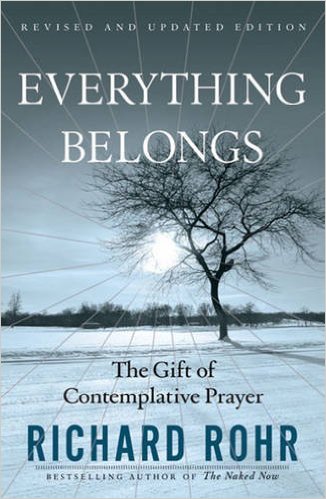
everything-belongs-rohrIn Everything Belongs,  Richard Rohr writes that we find freedom from our fears and anxious thoughts by facing them.

In this moment of awareness, we may find that our fears and wounds appear to be even worse than we have realized. There is no way around this. There is no way to avoid this.

As we face our thoughts, we will develop the capacity to trust in our crucified Lord who conquered all of suffering and death, identifying with our weaknesses and still rising to new life.

Much like the silent mystery of the Resurrection, our new life will come from God in ways that we cannot detect but that cannot be denied:


*****

“The wounds to our ego are our teachers and must be welcomed. They must be paid attention to, not litigated. How can a Christian look at the crucified and not get this essential point?”

*****

“A lot that’s called orthodoxy, loyalty, and obedience is grounded in fear. I do a lot of spiritual direction, and when I get underneath the language of orthodoxy and obedience, I find fear… We call it loyalty, but it’s often fear.”

*****

“Most people become their thoughts. They do not have thoughts and feelings; the thoughts and feelings have them… So we have to observe, but also not let the observer become an accusing tyrant.”

*****

“In the silence of contemplation, we will observe the process whereby we actively choose and create what we pay attention to. that’s why the first twenty minutes are usually so terrible.”

*****

“In reality our growth is hidden. It is accomplished by the release of our current defense postures, by the letting go of fear and our attachment to self-image. Thus, we grow by subtraction much more than by addition. It’s not a matter of more and better information.”

*****


For Reflection

featured-book-october-31


Friday Favorites for Prayer and Writing

Each Friday I share some of my favorite finds related to praying or writing. If I think it could help you pray or write better, then I’ll include it below.

Do you have someone else’s article or post to share? Join the Contemplative Writers Facebook group, comment on today’s post on my Facebook page, or follow me on Twitter (@edcyzewski) to nominate your favorite articles, blog posts, and books by Thursday at noon each week.

Seasons of the Soul via Adam McHugh

How Gratitude Made Ann Voskamp a Contemplative Activist

Tips for Handling a Toxic Co-Worker (The contemplative response? compassion)

Thoughts on Contemplative SilenceThoughts on Contemplative Silence

Sleepy Wasps and Ecclesiastes via Tanya Marlow

10 Predictions for the Days After November 8 (Deep breaths folks…)


Keep the Contemplative Writer Sustainable

The Contemplative writer is ad-free and never shares sponsored content, but it is a lot of work to maintain. We rely on affiliate links from the books we share and the generous donations of our readers. An automated monthly gift as low as $1 per month or a one-time gift of $5 goes a long way to sustaining our mission to provide contemplative prayer resources for our readers.

Learn how your support, through a one-time gift or small monthly gifts can keep this website running: Support Us Today