Scripture Meditation: Trusting God to Care for Our Souls


“To you, O LORD, I lift up my soul; my God I put my trust in you; . . .”
Psalm 25:1

Meditation

I bible-1440953-1279x852have long wondered what it means to “lift up my soul” to God, but I recently read one suggestion that “lifting up” our souls to God is a surrender. Lifting up my soul is a handing over of control to God.

A weary soul is consumed with the cares of this world, distracted by entertainment and greed, or caught up in pleasing others. Perhaps we “lift up” our souls to others each day as we hope they’ll notice us, affirm us, or meet a deep need.

Trust is no small matter. Is God worthy of our trust? Will God show up if we lift up our souls to him?

The practice of contemplation opens our souls to the presence of God. It’s a lifting of our souls to God, inviting him to care for us and our souls. Over time, we will learn to place greater trust in God, but we must begin by lifting up our souls in faith and expectation.


Reflection

How is your soul today?

Are you lifting up your soul to something or someone other than God?

What does it look like to trust God with your soul


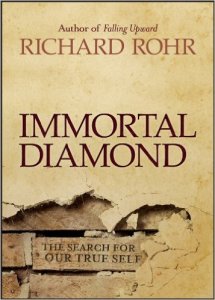
Featured Contemplative Book: Immortal Diamond

Immortal Diamond by RohrWeek Two: The Struggle with the False Self

Who am I?

This is a foundational question that we’ll forever struggle with in prayer and writing until we finally confront it. There may be no better tool for answering this question than Richard Rohr’s Immortal Diamond: The Search for our True Self.

This is the book that saved my soul, or at least saved me from myself.

The false self won’t be silenced easily. In fact, I have found that the false self is so hard to fight because living into your true self in God’s love requires doing LESS. So much of religion is about doing more or doing something differently. Rohr’s wisdom about the true self appears to be counterintuitive at first.


“Your True Self is who you are, and always have been in God . . . The great surprise and irony is that “you,” or who you think you are, have nothing to do with its original creation or its demise. It’s sort of disempowering and utterly empowering at the same time, isn’t it? All you can do is nurture it.”

* * * * *

“The soul, the True Self, has everything, and so it does not require any particular thing. When you have all things, you do not have to protect any one thing. True Self can love and let go. The False Self cannot do this.”

* * * * *

“Remember, please remember, you do not (you must not!) fear, attack, or hate the False Self. That would only continue a negative and arrogant death energy, and it is delusional and counterproductive anyway. It would be trying to “drive out the devil by the prince of devils,” as Jesus puts it. In the great economy of grace, all is used and transformed, and nothing is wasted. God uses your various False Selves to lead you beyond them.”

* * * * *

“What the ego (the False Self) hates and fears more than anything else is change. It will think up a thousand other things to be concerned about or be moralistic about—anything rather than giving up “who I think I am” and “who I need to be to look good.”


Finding your true self in God’s love is largely a matter of practicing the presence of God rather than trying to do any one thing better. If we let God define who we are, we’ll start to recognize the times when the false sense begins to whisper lies to us.

Once we learn to rest in Christ, we’ll begin to recognize when the imposter of the false self emerges.

Learn more about Immortal Diamond today.


Keep in Touch

Get our latest blog posts delivered to your inbox or sign up for the weekly contemplative email and receive a free eBook: The Contemplative Writer.


For Reflection or Sharing

Do less Contemplative Writer


Spiritual Progress Is in Spiritual Practice


“Let God use trials to help you grow. Do not try to measure your progress, your strength, or what God is doing. His work is not less efficient because what He is doing is invisible.”

100 Days in the Secret Place

100-days-secret-place

We make a mistake when speaking of spirituality. We speak of growth or progress, as if we should be able to track or measure how far we have come.

This leads us to rely more on ourselves and to even become anxious that we aren’t progressing enough. We can also miss the ways God is working in unseen places in our lives.

Is there an alternative to this? Well, we can begin by ending the practice of measuring spiritual growth. I wrote in a previous blog post:

As I’ve confronted my own measuring mania, I’ve tried to move away from the language of spiritual growth. I don’t want to know if I’m getting better or improving or providing some metric of my spiritual awesomeness.

The truth is that I could pray a lot or improve my Bible knowledge and still be a wandering, self-centered mess without direction.

Speaking of direction, spiritual direction is just the sort of thing we need to talk about instead of growth.

Let’s talk about where I am and where you are right now and which direction you’re moving in.

We could also speak in terms of temperature, being hot or cold.

Jesus spoke in terms of abiding on the vine. If we abide in him and he in us, the life of God will be evident. Our direction or proximity tap into this idea of abiding.

What if we ditched the language of spiritual growth in favor of spiritual proximity (close or far, hot or cold) or spiritual direction?

Are we living close to Jesus? Are moving in step with Jesus? Are you close enough to Jesus to know whether or not you’re moving in step with him?

Why We Need to Stop Talking about Spiritual Growth

What if our “progress” in spirituality is whether or not we’re engaged in spiritual practice? The “growth” isn’t in how far we’ve come but whether we’re turning toward God and simply making space in our lives?

As for the results–they are up to God.


Reflection

  • Do you find yourself struggling with spiritual performance or spiritual sloth? How does this post speak to that?
  • What does it look like to trust God with your spirituality?


Keep the Contemplative Writer Sustainable

The Contemplative writer is ad-free and never shares sponsored content, but it is a lot of work to maintain. We rely on affiliate links from the books we share and the generous gifts of our readers. An automated monthly gift as low as $1 per month or a one-time gift of $5 goes a long way to sustaining our mission to provide contemplative prayer resources for our readers. Thank you!

Choose a recurring monthly donation:

support-patreon-orange


Make a one-time gift via PayPal (credit cards accepted!)


Donate Now Button

Learn more about how to support us.


Featured Contemplative Book: Immortal Diamond

Immortal Diamond: the search for our true selfWeek One: The Search for Your True Self

Richard Rohr’s book Immortal Diamond offered a lifeline at a point in my life when I was discouraged, somewhat aimless, and deeply insecure. What was the root of my insecurity and overall misery? My false self that hinged on my accomplishment and what other people thought of me.

The false self requires constant reinforcement and progress in order to remain content. There may be no greater threat to contemplative writers than the false self. 

Keeping the false self happy feeds into so many other pitfalls, such as pride and envy. Who has time to pray when there’s a false self that must be maintained? Who can do the deep observation and painstaking editing that good writing requires while ensuring the false self is placated?

Richard Rohr grounds us in the wonderful news about who you are and where you can find rest as you approach God in prayer and then set about your work for the day:

*****

“Your True Self is who you are, and always have been in God . . . The great surprise and irony is that ‘you,’ or who you think you are, have nothing to do with its original creation or its demise. It’s sort of disempowering and utterly empowering at the same time, isn’t it? All you can do is nurture it.”

*****

“The soul, the True Self, has everything, and so it does not require any particular thing. When you have all things, you do not have to protect any one thing. True Self can love and let go. The False Self cannot do this.”

*****

“I promise you that the discovery of your True Self will feel like a thousand pounds of weight have fallen from your back. You will no longer have to build, protect, or promote any idealized self image. Living in the True Self is quite simply a much happier existence, even though we never live there a full twenty-four hours a day. But you henceforth have it as a place to always go back to. “

*****

“Find God, the primary source, and the spring water will forever keep flowing (Ezekiel 47:1-12; John 7:38) naturally. Once you know that, the problem of inferiority, unworthiness, or low self-esteem is resolved from the beginning and at the core.” Pg 31

*****

“In ordinary language, the True Self is held together by the glue of a universal love. ‘For God is love and anyone who lives in love lives in God, and God lives in him” (1 John 4:16). When we live in such abundance, we do not need to fight or defeat our False Self. It naturally fades into the background in the presence of absolute abundance and absolute allowing.” Pg. 55

*****

If you’ve read Daring Greatly by Brene Brown, and I hope you will soon, you know that the key struggle we all face is believing this: “I am enough.” Rohr completes this mantra: “I am enough because of God’s love.” 

The truth that I have found is this: Nothing in this life will ever be good enough or offer a peace and security that compares to God’s love. 

Read more about Immortal Diamond

About Featured Books: Each month I’ll share weekly posts about the month’s featured book.

Keep in Touch

Get our latest blog posts delivered to your inbox or sign up for the weekly contemplative email and receive a free eBook: The Contemplative Writer.

For Reflection or Sharing

True self Contemplative Writer (1)

Announcing The Contemplative Writer: Soul Care and Spiritual Practices for Writers

cropped-the-contemplative-writer-twitter-header.jpg

Where does your identity come from?

I’m going to guess that anyone attracted to a site called The Contemplative Writer looks to their faith and their writing as important parts of their identities. Writing is extremely fulfilling and can serve others, but it will fail anyone who looks to it as as an identity.

The foundational principle for everything that follows at The Contemplative Writer is this: Your identity is determined by God’s love for you, and you’ll only find that identity by caring for your soul. While there are many ways to care for your soul, the goal of this website is to lay a strong foundation of Christian contemplative spiritual practices so that you can pray and write with a healthy, well-grounded soul.

Richard Rohr of the Center for Action and Contemplation says that he focuses on 80% contemplation in order to guide 20% of his action. Our actions (or writing) will be rooted in love and purpose when they are grounded in an identity established by God through our contemplation.

For those of us who write, our identities can be particularly fragile. While anyone can benefit from this website in the weeks and months to come, writers of faith will especially benefit from the practices and mindsets presented in daily posts and weekly newsletters.

If your identity is dictated by outside voices and circumstances, there’s every reason to believe that your soul will suffer and your actions will veer in any number of wrong turns. At the contemplative writer the content I share each day follows Rohr’s 80/20 approach: 80% guiding contemplation and 20% guiding writing practice. If we can use the tools of Christian spirituality to help you connect with God and to care for your soul, I believe we’ll be in a much healthier place for our writing.

Each week you’ll find the following brief blog posts (100-300 words) to aid your contemplative journey:

  • Monday: Quotes from a book of the month on contemplative prayer.
  • Tuesday: Scripture meditation.
  • Wednesday: Featured article or book on contemplative prayer or writing practices.
  • Thursday: Contemplative profile or history.
  • Friday: A list of prayer or writing links.
  • Saturday: Guest writers and spiritual directors (coming soon)

Each month you can also expect a weekly newsletter that will soon be adapted into a podcast as well.

Finally, a small disclaimer…

I have not set up this website because I am the most accomplished or knowledgable contemplative Christian. I do not view myself as an expert. I am merely someone who has immersed himself in Christianity since my youth, and the contemplative prayer practices I started learning in the early 2000’s have been the most important, formative, and longest-lasting aspects of my faith. The more I lean into contemplative prayer, the more essential it becomes for my faith and my calling as a writer.

I set up this website because I wanted to immerse myself in contemplative prayer while also sharing my journey with others. I hope that this new venture helps you find space to meet with God, guidance for the road ahead, and rest for your soul as you create and bless others. I’ll share some simple ways you can keep in touch and support us below.

Thank you for visiting!

Ed

Subscribe to daily blog posts via email (Scroll down for the RSS feed link).

email posts

Join our weekly contemplative email list (Get the new eBook The Contemplative Writer for free too!).

subscribe-today-nl

Support us with monthly or one-time gifts (we don’t run ads or sponsored posts).

Monthly gifts (starting at $1/month)

support-patreon-orange

One-time gifts (suggested $5)

Donate Now Button


Check out the contemplative prayer resources page.


For Reflection or Sharing:

Quote for Contemplative writer launch