Blog

WEEKLY PRAYER: THOMAS A KEMPIS

This week’s prayer is from Thomas à Kempis (ca. 1380-1471), a Dutch-German monastic, priest, and spiritual writer. He authored one of the most popular devotional treatises of all time, the Imitation of Christ.

***

O Lord my God, be not far from me; my God, have regard to help me; for my thoughts and fears have risen up against me and afflict my soul. How shall I pass through them unhurt? How shall I break them to pieces? My hope and my only consolation is to flee to you in every tribulation, to trust in you, to call upon you from my inmost heart and to wait patiently for your consolation. Amen.

Source

FRIDAY FAVORITES FOR PRAYER AND WRITING

Welcome to Friday Favorites! Prasanta Verma and I hope you enjoy this week’s roundup, which includes wonderful words on creativity, kindness, poetry, saints, and spiritual practices. Enjoy and be blessed.

***

Touching Sacred Earth: Expressive Art and Spiritual Practice with Christine Valters Paintner via EarthRising podcast (disciplines that cultivate a connection with creation and the Creator)

A little more kindness, a little less madness via Cara Meredith (could this kindness be the Christ?)

Seven Suggestions for Living a Creative Life via Dorothy Greco (creativity is part of our spiritual DNA . . . get inspired with these suggestions)

The Return via Marilyn R. Gardner (holy moments and the peace of belonging)

Beyond Juan Diego and Kateri: Meet other indigenous American saints via Meg Hunter-Kilmer (learn about lesser-known saints who embraced Christianity without rejecting the beauty of their own cultures)

Book Launch Interview with Luci Shaw via Writing for Your Life (hear the prolific poet read her poems and talk about writing, divine creativity, and advice for new writers)


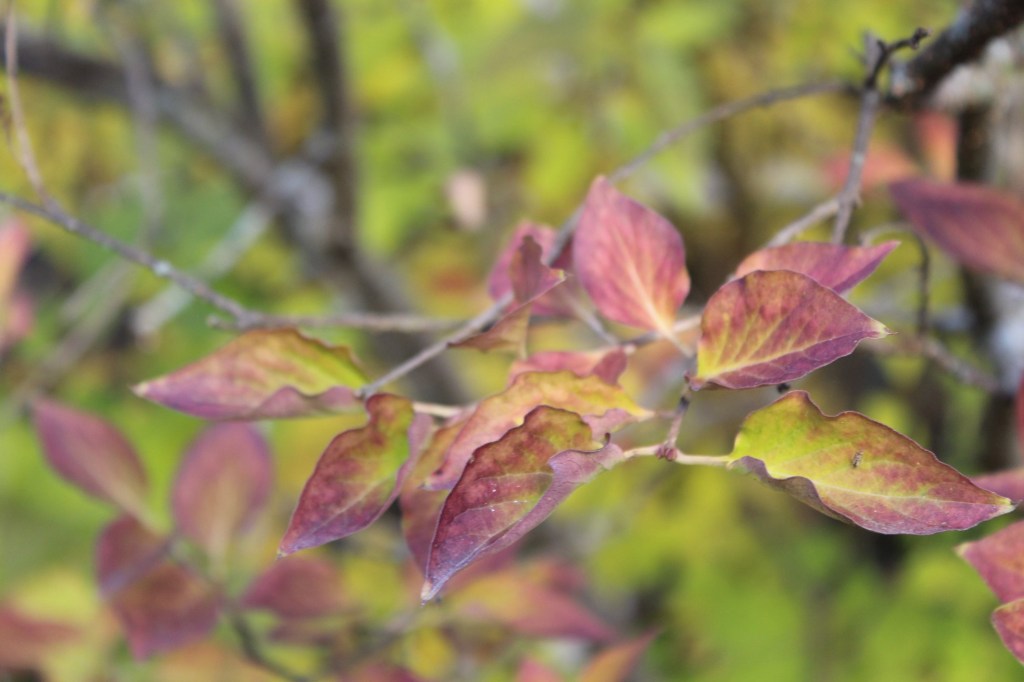
Leaf Song: A Poem by Prasanta Verma


Leaf Song


Beautifully curling upward
Cupping droplets on its skin

I take my finger, wipe the drop
Leaving a skirmish behind

*

The autumn leaf is like a heart
Turned toward heaven

Changing colors, singing in its death
I wonder, Leaf, how many songs you have sung?

*

I wrap myself in a coat of leaves
Stand under a sheltering tree

Sing with the wind
Go to the one who sings over me

Cup my hands, raise them—empty
Here they are, here am I

*

Am I to be like that last leaf,
Stuck on the tree? Alone?

 I am answered,
“You are connected to the vine.”

Water spills over my hands, overflows,
Slips through my fingers.


***

Photos: Prasanta Verma

Prasanta Verma, a poet, writer, and artist, is a member of The Contemplative Writer team. Born under an Asian sun, raised in the Appalachian foothills, Prasanta currently lives in the Midwest, is a mom of three, and also coaches high school debate. You can find her on Twitter @VermaPrasanta, Instagram prasanta_v_writer, and at her website: https://pathoftreasure.wordpress.com/.

WEEKLY PRAYER: W. E. B. DU BOIS

W. E. B. Du Bois (1868 – 1963) was an American writer, historian, and civil rights activist. Today we are praying his prayer for grace and courage in the face of the work that cries out to be done in our lives and our society.

***

Give us grace, O God, to dare to do the deed which we well know
cries to be done. Let us not hesitate because of ease, or the
words of men’s mouths, or our own lives. Mighty causes are
calling us—the freeing of women, the training of children, the
putting down of hate and murder and poverty—all these and
more. But they call with voices that mean work and sacrifices
and death. Mercifully grant us, O God, the spirit of Esther, that
we say: I will go unto the King and if I perish, I perish.

Source

FRIDAY FAVORITES FOR PRAYER AND WRITING

It’s Friday again . . . and that means it’s time for Friday Favorites! It’s such a joy to find and share these links each week. Good and true words bring hope into the world. This week, Prasanta Verma and I have rounded up an amazing collection of words that will help you pray, ponder, and read. Enjoy, and be blessed.

***

Ode to Autumn via Brian Draper (a guided autumn walking retreat)

How the medieval practice of stargazing can change your prayer life via David Russell Mosley (look to the stars and remember that the heavens are telling the glory of God)

What does healing look like within faith communities? via Kimberly Pelletier and Samuel Ogles (an Ask a Spiritual Director podcast episode)

We Are All Related via Nathan Beacom (Black Elk’s spiritual vision for peace)

Reading Emily Dickinson with Job via Laura Cerbus (the resistance and obedience of Dickinson and Job)

Books for pandemic reading via The Christian Century (nine writers tell us about books that reframe what it means to be a person of faith)

Swimming with God

Imagine something with me. You’re in a ship in a raging sea, going somewhere important. Perhaps going on a pilgrimage. But it’s beginning to look like you’re not going to make it. The ship dips and lists. The sea is alive – a force against you. You pray to God to save you from destruction.

Doesn’t our faith often feel like this? Like we’re being tossed around by untamable wind and waves? Medieval theologians often compared the world to the sea. “All the ways of this world are as fickle and unstable as a sudden storm at sea,” wrote the Venerable Bede in the 8th century. And every soul must cross this sea on the journey through life.

So what do we do? Usually we respond with alternating displays of strength and alarm. We try to build a stronger ship. Bone up on our sailing skills. Lay in resources. And when the storm comes, we cry out to Jesus to pilot our ship.

Now imagine that the worst happens. Despite everything you’ve done, your ship capsizes . . . you fall into the water. And it becomes calm, buoyant. You realize that you’re floating. Swimming. Drinking water yet not drowning.

How is this possible?

Perhaps because we’ve got it wrong. Perhaps Jesus does not pilot us through the sea but is the sea. Perhaps this is the way we make it through the waves.

Two female mystics of the Middle Ages paint this picture of our journey. The 14th-century Dominican Catherine of Siena prays:

Eternal Godhead!
I proclaim and do not deny it:
you are a peaceful sea
in which the soul feeds and is nourished
as she rests in you in love’s affection and union
by conforming her will with your high eternal will—
that will which wants nothing other than that we be made holy.

(source)

In this prayer, the sea becomes a figure of God’s gracious abundance. The soul does not have to survive the water in a ship. Instead, God is the water. He envelops us, and we rest in him.

We might even go for a swim in this sea. The 13th-century mystic Marguerite d’Oingt writes of a vision of unity she received:

The saints will be within their Creator as the fish within the sea: they will drink as much as they want, without getting tired and without diminishing the amount of water. The saints will be just like that, for they will drink and eat the great sweetness of God.

(source)

Marguerite envisions the sea as a source of living water that never runs out (John 4:10-14). It’s a source of nourishment, where the saints (that’s you and me!) taste the sweetness of God.

I love this imagery for the way it rewrites the usual script about the sea of life. In the words of Catherine of Siena and Marguerite d’Oingt, the sea does not inspire terror but represents the incredible generosity of God. It’s a way to conceive of being fully enveloped in God’s goodness. And it’s an image of peace and rest.

As we ply the waters of life, let us remember the vastness of God who, like the sea, is everywhere. Let us be assured that if our ship capsizes, we will not perish. Should we be tossed overboard, we can swim like fish in the sea that is God.

***

This post is loosely based on one chapter from my forthcoming book, 3000 Miles to Jesus: Pilgrimage as a Way of Life for Spiritual Seekers. It’s a sneak peak behind the scenes, because it contains a lot of material that didn’t make it into the book! Click here (my author website) for more info on 3000 Miles to Jesus.


WEEKLY PRAYER: ST. TERESA OF AVILA

This week’s prayer is by Teresa of Avila, (1515-1582) a Spanish nun in the Carmelite order. Teresa was a mystic, a founder and reformer of monasteries, a spiritual director, and a writer. Although her most famous work is The Interior Castle, the prayer below comes from St. Teresa’s Autobiography.

***

O my Lord, how good You are! Blessed be You forever, O my God! Let all creatures praise You Who have so loved us that we can truly speak of this communication which You have with souls in this our exile! Yes, even if they be good souls, it is on Your part great munificence and kindness. In a word, it is Your loving-kindness, O my Lord.

Source

FRIDAY FAVORITES FOR PRAYER AND WRITING

Welcome to Friday Favorites! This week, Prasanta Verma and I bring you a collection of links on poetry, stories, witness, writing, and . . . eternity! We hope they prompt you to reflect and to hold on to faith. Read, listen, and be blessed.

***

Water; A Poem via Ana Lisa de Jong (a beautiful prayer poem about trust)

Matins via Louise Glück (a poem from the Nobel Prize winner in literature)

This eternal moment via Simon Parke (when eternity pricks the present moment, we can see past our past and believe that all is well)

Stories as Service via Festival of Faith and Writing (this podcast episode looks back at past FFW speakers on this theme)

Your Witness Is Showing via Collin Huber (speak, post, debate, and vote, but do so with your allegiance to Christ on full display)

Letter Writing as a Powerful Prompt via Stuart Horwitz (how the quaint art of letter writing can benefit our other writing projects)

Are You A Mystic?

As you may have noticed, I’m always talking about the Christian mystics of the Middle Ages. But did you know that there were no mystics in the Middle Ages? The figures we call “mystics” – like Julian of Norwich and Catherine of Siena — would have referred to themselves as contemplatives or perhaps simply as devout Christians.

“Mystic” and “mysticism” are more modern terms (17th century). But the medievals did use the adjective “mystical.” The 15th-century chancellor of the University of Paris, Jean Gerson, wrote a book about mystical theology, which he defines as knowledge of God that comes from love (as opposed to books or academic study). Medievals also spoke of the mystical meaning of the Bible – its deeper, spiritual meaning, which usually pointed to the mystery of Christ.

So what about those figures we call mystics? Figures like Julian of Norwich, Catherine of Siena, and Meister Eckhart? These Christians experienced a heightened consciousness of God’s presence. They sought God’s love based on direct experience, not textbook knowledge. This is what we mean when we call them mystics – and I think it’s fine for us to use this term since it’s firmly entrenched in our vocabulary now.

In the medieval era, a mystical encounter with God could result from lectio divina – reading and spending time with Scripture. At other times, it might come after meditating on scenes from Christ’s life or on sacred imagery.

Margery Kempe had a mystical experience upon seeing the site of Calvary in the Church of the Holy Sepulchre in Jerusalem. She was graced with a vision of the crucified Christ in the very place he suffered and died. It knocked her to the ground. Jesus, she says, was present before her eyes.

However, mystics did not always have visions. Nor did they always experience complete or ecstatic union with God. Those were special gifts given to some of them. And they were also fairly rare experiences. The criteria for being a mystic is much simpler, and it opens the door to an “everyday mysticism” to which you and I have access today. Simply put, a mystic seeks a deeper and more direct consciousness of God in her daily life. She wants to be awakened by God! This often happens through what seem like quite ordinary activities, like prayer, reading and meditating on Scripture, and being part of a Christian community. Always, it happens through the work of the Spirit in us.

So . . . it’s not audacious to define yourself as a mystic; it doesn’t mean you’re extra holy or have to meet some impossible standard. It just means that you seek greater intimacy with God and long to be enlivened by God’s eternal presence.

What attracts me the most about mysticism is that it coaxes me out of my hiding place. I can hide behind books about God and Christianity; I can fall back on my education or on acquiring more knowledge (including Wikipedia sometimes–oops!). But all this will mean very little unless I truly know, on a heart level, God’s all-encompassing love. This is why I need to be an everyday mystic.

How about you? Would you define yourself as a mystic?

For reflection:


WEEKLY PRAYER: ST. FRANCIS OF ASSISI

This week’s prayer comes from St. Francis of Assisi (1181 – 1226). Francis’s Feast Day was on October 4.

***

All Highest and Glorious God,
cast your light into the darkness of my heart.
Grant me right faith, firm hope, perfect charity,
profound humility,
with wisdom and perception, O Lord,
so that I may always and everywhere
seek to know and do what is truly your holy will,
through Jesus Christ our Lord. Amen.

Source