Blog

Treasures from the Tree Maker: A Post by Prasanta Verma

Abscission (noun)*

  1. the act of cutting off; sudden termination.
  2. Botany. the normal separation of flowers, fruit, and leaves from plants.

The Tree
From a place deep within itself, the autumn tree bursts forth in glorious color, and shows a different face of its beauty. Colors emerge like hidden jewels, sparkling in the sun. The season is turning, and once again I contemplate the language of the Tree Maker speaking through the deciduous tree.

fall-2014_crimson-magentaleaves
Photo: Prasanta Verma

The Leaves
For months they are magnificent lush and green, but as temperatures cool, leaves transform, change colors, and strike us with emanating, glowing hues. We have to catch the show at the right time. The window is short. A week too late, and the leaves could be gone, fallen to the ground in a dusty heap.


Questions
Why do leaves change color in a glorious display for only a short time, only to fall to the ground, dead?
Why do trees lose their magnificent crown, drop their jewels, shed their shimmering coats, just before the onslaught of bitter, brutal cold, winter winds, and ice and snow? Why at that moment of time?

The Tree Maker
Surrender. Did you notice that glory shines brightest before Tree dies during autumn? It shines then gives up a part of its treasure – its leaves– and only a spindly skeleton remains for the long winter season. The autumn leaves that glow, and then die, exemplify the beauty of letting go. Its branches are always lifted upward like arms in praise. With a dark, cold season approaching, my Tree surrenders bravely as it is stripped of its glorious coat of color and stands bare naked in the coldest months of the year.

Finding Rest. In the whirlwind of life the tree is firmly planted. It may sway in the wind, but it won’t come out of the ground. Its roots are firmly established. The peace, the place of rest, amidst seasons, the bitter winter, and the whirlwind of life, is found in Me: “Return to your rest, O my soul, For the Lord has dealt bountifully with you.” Psalm 116:7. The leaves return to their place of rest.

Deeper Roots. Abiding with Me makes for deeper roots. Surviving the winter is part of the process. Surviving in the environment where they are planted is also part of the process. During one season they bear fruit, in another season, the seeds fall and lie dormant in the ground, but the seeds do not die in the winter. I am cultivating life, even in darkness, even in the long winters of your life.

Finding Rest. The trees of autumn appear to me like aging trees, and through their changing colors, they show off their wisdom and knowledge, as if these are crowning acts of their lives. But then their glory dies all too soon, and their colors fade and their leaves drop dead to the ground. Then the snow falls upon the bare tree.

October
As in: trees laughing leaves, floating in the wind.
I catch a handful of laughter, toss it back in the air.

As in: the hidden beauty in growing old, in death, revealed and witnessed through vibrant colors of burnt orange, flaming scarlet, deep gold.
I see the lines of mirth and hues of grace in an aging autumn. I, too, am another year older, passing through another autumn, an unknown number of autumns remaining.

fall_brown-leaves-on-pavement
Photo: Prasanta Verma

As in: the beauty of letting go, surrender, the tree succumbing to the cold of winter without its luscious wrap of leaves.
The tree, another year older, yields to the process of time and change. I, too, have seasons of hard times, removal, loss, and renewal.

As in: watching youthful green disappear as quickly as it came.
I soon will see the tree, standing in the middle of winter like a stark, bare skeleton with spindly limbs. Only its leaves will have died; the tree remains alive and breathing, waiting for its time to bloom again.
Hidden jewels exist behind the coat; “great and unsearchable things”, words of life and wisdom and the peace of His presence, that the Coat-Remover Himself reveals after the false wrappings of this life are taken away.

Senescent (adjective)*

  1. growing old; aging.
  2. Cell Biology. (of a cell) no longer capable of dividing but still alive and metabolically active.

*definitions from dictionary.com

***

Prasanta Verma is a member of The Contemplative Writer team. She’s a writer, poet, and artist. Born under an Asian sun, raised in the Appalachian foothills, Prasanta currently lives in the Midwest, is a mom of three, and also coaches high school debate. You can find her on Twitter @ pathoftreasure, Instagram prasanta_v_writer, and at her website: https://pathoftreasure.wordpress.com/.

 

WEEKLY PRAYER: A Meditation for All Saints Day

A Prayer Meditation for All Saints Day by Safiyah Fosua:

*****

We give you thanks, O God, for all the saints who ever worshiped you
Whether in brush arbors or cathedrals,
Weathered wooden churches or crumbling cement meeting houses
Where your name was lifted and adored.

We give you thanks, O God, for hands lifted in praise:
Manicured hands and hands stained with grease or soil,
Strong hands and those gnarled with age
Holy hands
Used as wave offerings across the land.

We thank you, God, for hardworking saints;
Whether hard-hatted or steel-booted,
Head ragged or aproned,
Blue-collared or three-piece-suited
They left their mark on the earth for you, for us, for our children to come.

Thank you, God, for the tremendous sacrifices made by those who have gone before us.
Bless the memories of your saints, God.
May we learn how to walk wisely from their examples of faith, dedication, worship, and love.

(Source)

FRIDAY FAVORITES FOR PRAYER AND WRITING

Thank you for joining us for Friday Favorites! Each week, Prasanta Verma and I round up our favorite links related to prayer, spirituality, and writing. We hope it will enrich your life and help you to find the best the web has to offer.

Read, enjoy, and be blessed.

***

Writing–

For Those About to Write, I Salute You via John Blase (commit to becoming and staying a good writer–and a good human)

Why Letter-Writing Is Essential to the Good Life via Michael De Sapio (the benefits of reviving a “forgotten” art form)

31 Days of Writing Tips via Kate Motaung (check in daily for this series brought to you by Kate’s Five Minute Friday)


Spirituality–

Reflections via Curt Thompson, M.D. (what a great resource — three-minute reflections to help you re-focus and re-center, based on where you are spiritually right now)

Unnoticed in a “Notification” World via April Fiet (on wanting to be noticed, wanting to be invisible…and being seen by our Creator)

Practices to Awaken to Hope in the Chaos via Ashley Hales and Catherine McNceil (a conversation with author Catherine McNeil on the Finding Holy podcast)

When Jesus Did the Dishes

Last week I wrote about dishwashing as a spiritual discipline. By channeling the wisdom of a Buddhist monk and a medieval master, we can “wash each dish as if it were the baby Jesus.” We introduce tenderness into a chore that usually invites frustration.

Did you know that Jesus himself was said to have done the dishes?

We can thank the Middle Ages for this insight into the Savior’s life. In the fifteenth century, Jean Gerson, chancellor of the University of Paris, wrote a narrative poem called the Josephina. This poem celebrates the life and faith of Jesus’ earthly father, St. Joseph. In the poem, we find all kinds of scenes about the daily life of the holy family, including the boyhood of Jesus. And this brings us to the dishes. Gerson writes:

Thus Christ was subject, as he was to you, Mary and Joseph,
What kind of subjection did he wish for himself?
Was he not showing obedience in your midst, as one who rightly serves?
Carefully and often he lights the fire and prepares the food;
He does the dishes and fetches water from a nearby fountain.
Now he sweeps the house, gives straw and water to the donkey.*

This tidbit about Jesus is, as you’ve doubtlessly realized, extra-Biblical. Gerson uses his imagination to bring to life the Bible’s brief statement that the boy Jesus was obedient to his parents (this was after Jesus was “lost” for three days in Jerusalem–see Luke 2:51).

Gerson’s poem represents the medieval imagination at its finest. Like Ludolph of Saxony’s Life of Christ (discussed in my previous post), it paints a picture of Jesus meant to delight us and to invite us into his daily life.

There’s some good theology behind this and related scenes. Jean Gerson says that there is no better way to soften hard hearts than to see God acting as a child. He wanted to help Christians delight in the boy Jesus and to affirm that God became human—a small human with parents, chores, and child-like faith. Gerson’s imagination is in service of the incarnation.

I think we could use a little more imagination in our faith today. We are so good at studying the Bible. We parse its meaning verse by verse and even word by word. We defend our beliefs with arguments and analysis. We listen to three-point sermons that tell us how to live.

But sometimes, this approach leaves me exhausted. I feel like I’m drowning in interpretation. I recently turned down an invitation to join a Bible study because, frankly, it seemed too labor intensive. It involved too much homework, too many workbooks, and too many lectures. I love God’s word, but sometimes, instead of study guides, I need to be guided to some lighter moments. I need to enjoy my faith and to delight in who Jesus was and is. “God laughs into our soul and our soul laughs back into God,” writes Richard Foster about experiencing delight in our Lord.

Gerson’s poem opens the door to a moment of delight, one I can experience even at the kitchen sink. Thanks to this medieval chancellor, I can no longer do the dishes without imagining the boy Jesus scrubbing away at the nearby fountain. I think of the incarnation, which is good. I remember that Jesus participated fully in the messiness of life.

But more than all that, I smile. I like thinking that God did the washing up, in more ways than one.

***

*Source: Brian Patrick McGuire, “When Jesus Did the Dishes: The Transformation of Late Medieval Spirituality” in The Making of Christian Communities in Late Antiquity and the Middle Ages, ed. Mark Williams (London: Anthem Press, 2005), pp. 131-152.

WEEKLY PRAYER: ST. AUGUSTINE

Today’s prayer comes from St. Augustine of Hippo:

Look upon us, O Lord,
and let all the darkness of our souls
vanish before the beams of your brightness.

Fill us with holy love,
and open to us the treasures of your wisdom.
All our desire is known unto you,
therefore perfect what you have begun,
and what your spirit has awakened us
to ask in prayer.

We seek your face,
turn your face unto us and show us your glory.
Then shall our longing be satisified,
and our peace shall be perfect.

How to Wash the Dishes

In last week’s post, we explored what I call a kitchen sink spirituality. Can we find a worthwhile practice in the mundane task of washing the dishes? What can it teach us? We looked at three references to a spirituality of dishwashing.

There is a fourth reference I’d like to explore today.

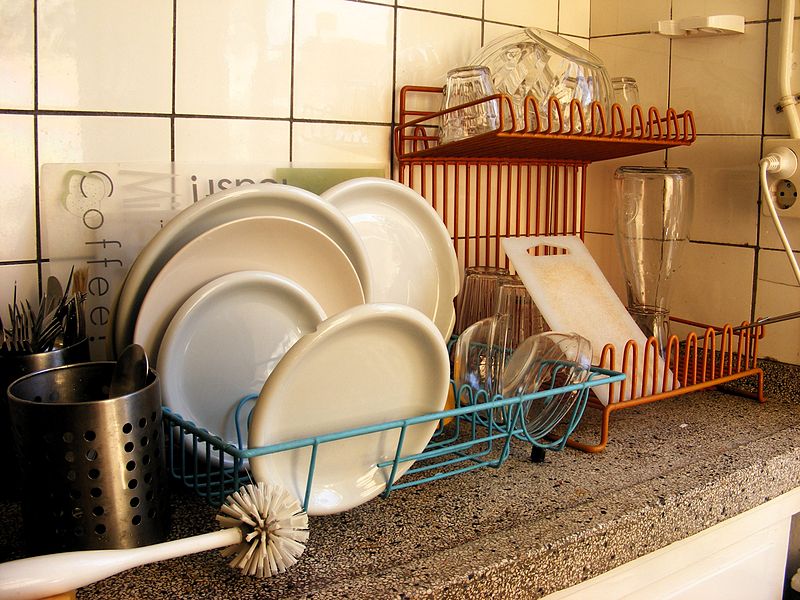
dishesOn his website, author Jim Forest tells a story about his friend, the Buddhist monk Thich Nhat Hanh. One evening at a dinner party, Forest was annoyed at the pile of dishes he was stuck washing while everyone else was having a great conversation in the other room. Sensing his annoyance, Nhat Hanh told him, “You should wash the dishes to wash the dishes.” Forest was puzzled. Then his friend advised him to “wash each dish as if it were the baby Jesus.”

I’m really drawn to Nhat Hanh’s response. When I first read it, I was immediately transported to the Middle Ages, my favorite time period. Nhat Hanh may have meant to impart advice on mindfulness, but he sounds just like a medieval devotional master.

In the late Middle Ages, many devotional texts invited their readers to experience the humanity of Jesus in a new and startling way. Their goal was to foster an experience of intimacy with the savior. The Life of Christ by Ludolph of Saxony (14th c.), for example, asks lay Christians to imagine holding and caring for the baby Jesus:

Kiss the beautiful little feet of the infant Jesus who lies in the manger and beg his mother to let you hold him a while.

And later:

[T]he holy Virgin, following the law that had been established, left the city of Bethlehem with Joseph and the infant Jesus to go to Jerusalem, five miles distant, to present Our Lord in the temple. You go, too, in their company, and help them carry the child.

I never fail to be moved by the tenderness of this invitation. Ludolph asks his readers not just to meditate on Jesus, not just to think about him or rehearse the events in his life. He invites every person to enter into Jesus’ life. This reverses the way we usually approach Jesus. Instead of asking our Lord to help us, we help care for him. We kiss and hold and carry his infant self. For a moment, we are his mother.

I’m fascinated by the way a contemporary Buddhist monk channels this text. I doubt that Nhat Hanh meant to get medieval on us, but he did–-and together with Ludolph of Saxony, his advice helps to transform a small part of our daily life. Hold the infant Jesus a while. Wash each dish as if it were the baby Jesus.

Doing the dishes can make me so angry. I’m tired at the end of the day. I see the piles of dirty plates, not all of which will fit into the dishwasher, and I simply don’t want to wash them. But how could I be angry washing the baby Jesus? How could I refuse an invitation to take him into my arms?

I need this kind of spirituality, one in which tenderness and imagination melt away my frustration. One in which Jesus becomes startlingly present in my life. What, after all, could be more startling than suddenly seeing Jesus in your kitchen sink? It’s the jolt needed to restart and soothe my troubled heart.

If henceforth my family sees me weeping at the sink after dinner, it will be because I hold not only dishes, but also the infant savior.

Dishwashing as a spiritual discipline? Surely so. One that I practice each day. One that brings me to Jesus. One that washes me of anger even as I wash the dishes clean.


WEEKLY PRAYER: St. Teresa of Avila

This week’s prayer is more of a meditation or a loving admonition. It comes from St. Teresa of Ávila (1515 – 1582), Carmelite nun and mystic, whose Feast Day is today (October 15).


Teresa of Avila

*****

Let nothing disturb you.
Let nothing upset you.
Everything changes.
God alone is unchanging.
With patience all things are possible.
Whoever has God lacks nothing.
God alone is enough.

(Source)


FRIDAY FAVORITES FOR PRAYER AND WRITING

Thank you for joining us for Friday Favorites! Each week, Prasanta Verma and I round up our favorite links related to prayer, spirituality, and writing. We hope it will enrich your life and help you to find the best the web has to offer.

Read, enjoy, and be blessed.

***

We Are Free to Learn Slow by Tasha Jun (a beautifully liberating message — we are free to move at the pace God has given us)

How to Stop Work From Taking Over Your Life by Sheridan Voysey (discover “sacred inefficiency” and why your weekend is about more than recharging for the week ahead)

A Prayer for Those Who Feel Awkward in Social Situations via Douglas Kaine McKelvey (Who me? I don’t need this prayer. *Runs and hides*)

A Rough and Ready Primer on Traditional Publishing via Andi Cumbo-Floyd (helpful info for writers wanting to go the traditional publishing route)

Novelist Cormac McCarthy’s tips on how to write a great science paper via Nature (his advice is transferable to other subjects– and, well, it’s Cormac McCarthy)

“Emergency Poet” opens literary “pharmacy” to support mental wellbeing via Keele University (literary “first aid” as a way of bringing the therapeutic benefits of poetry to the local community. “Yes” to more poetry!)


Kitchen Sink Spirituality

Sink. Soap. Suds. Plates. Pots. Pans. And . . . prayer?

Washing the dishes isn’t included in the big books on spiritual disciplines—not in Richard Foster’s classic Celebration of Discipline nor Adele Calhoun’s Spiritual Disciplines Handbook, which describes a whopping 62 disciplines.

But maybe it should be.

DishesIn recent months I’ve come across no fewer than four references to people who have made doing the dishes into a discipline of sorts. Four! That can’t be a fluke. Is there something about dishwashing—other than its obvious need to be done—that recommends it to Christians today?

Let’s take a look at what people are saying about the dishes. Today we’ll explore three of the references I found. I’m saving the fourth (my favorite one) for next week.

Christine Berghoef gets poetic about dishwashing in a post at the Shalem Institute for Spiritual Formation:

In the predictable rhythm of liquid warmth swirling through my washcloth as I swab away remnants of the day’s nourishment, the liltingly light splash of the faucet rinsing the suds, and the movement from rinse to dry rack, I am soothed. Unwound. Almost tranquilized. It forces me to pause, to ruminate over the events of the day, to be still.

In Playing God: Redeeming the Gift of Power (IVP Books, 2013), Andy Crouch, describes the small discipline of doing the dishes as an exercise in humility. Tackling the crockery before he leaves for a speaking engagement, he says, helps him to limit “my own exercise of godlike freedom and significance” (pp. 241-242).

Finally, Tish Warren mentions dishwashing in her book, Liturgy of the Ordinary. The disciplines needed to sustain our spiritual life, Warren says, are often quiet, repetitive, and ordinary. This may be counter-intuitive, but it’s how growth occurs:

I often want to skip the boring, daily stuff to get to the thrill of an edgy faith. But it’s in the dailiness of the Christian faith—the making the bed, the doing the dishes, the praying for our enemies, the reading the Bible, the quiet, the small—that God’s transformation takes root and grows (35-36).

I love all three of these! Each brings to the fore a different spiritual benefit of doing the dishes:

  • being still
  • being humble
  • finding Jesus in the mundane

Given my natural approach to life, I need all of these benefits. I tend to get frustrated by daily chores. As I wrote in a previous post, I believe that I should be doing something more “exalted” with my time. And that means I need a good dose of humility. It also means that I need a reminder of Jesus’ presence. He is there, even (or maybe especially) in the mundane tasks of the day. These tasks show care for my family and slow me down enough to be present in the little moments of my life.

Which means that I may need fewer mountain-top experiences and more mountains of dishes. A kitchen sink spirituality.

What about you? Where do you need to see Jesus reaching into the mess of your daily life?


WEEKLY PRAYER

A prayer before writing or studying from St. Thomas Aquinas (1225 – 1274):

*****

Ineffable Creator,
Who, from the treasures of Your wisdom,
have established three hierarchies of angels,
have arrayed them in marvelous order
above the fiery heavens
and have marshaled the regions
of the universe with such artful skill,

You are proclaimed
the true font of light and wisdom,
and the primal origin
raised high above all things.

Pour forth a ray of Your brightness
into the darkened places of my mind;
disperse from my soul
the twofold darkness
into which I was born:
sin and ignorance.

(Source)