Blog

SCARLET THREAD: A Poem by Prasanta Verma

Scarlet Thread

A scarlet thread
burns long, thin,
intersecting Sunday
and the corner
of my heart–
hungry for red.

I know the thread,
the very one—
pulls me to the cross,
unfolds like silk.
I pull string taut,
tie knot
so needle won’t slip.

A few crimson threads
fall to the floor,
and taste the hunger
of belonging.
Scarlet wounds are not sealed
with simply a stitch.

If the button did not fall,
slip out of the pocket,
get lost on a Sunday,
I’d still be searching.

Can I say what is mine
and what is yours?
Can you tell me where
the scarlet thread ends?

A coat of crimson
covers me, covers you,
swathed with scarlet thread.


Prasanta Verma, a poet, writer, and artist, is a member of The Contemplative Writer team. Born under an Asian sun, raised in the Appalachian foothills, Prasanta currently lives in the Midwest, is a mom of three, and also coaches high school debate. You can find her on Twitter @VermaPrasanta, Instagram prasanta_v_writer, and at her website: https://pathoftreasure.wordpress.com/.

WEEKLY PRAYER: MECHTHILD OF MAGDEBURG

Today’s prayer comes from Mechthild of Magdeburg (ca. 1207 – ca. 1282), a German mystic and a Beguine. She was one of the first mystics to write in German rather than Latin. Her feast day is November 19.

***

O burning Mountain,
O chosen Sun,
O perfect Moon,
O fathomless Well,
O unattainable Height,
O Clearness beyond measure,
O Wisdom without end,
O Mercy without limit,
O Strength beyond resistance,
O Crown beyond all majesty:
the humblest thing you created sings your praise.

Source

FRIDAY FAVORITES FOR PRAYER AND WRITING

Welcome to Friday Favorites! The links Prasanta Verma and I found this week help us explore our deepest self in relationship to God. What has God given us and who has God created us to be? We hope you enjoy digging into these. Remember, always, that you are the beloved of God.

***

As a Child: God’s Call to Littleness via Phil Steer (a new podcast that unpacks what it means to “become like little children”)

We Have Today via Arlisia Potter (living in and thanking God for this day)

Cindy Bunch on Self-Kindness as Spiritual Practice via Casey Tygrett (being kind to ourselves as a way forward to loving others)

Through a Looking Glass Darkly: How (and how not) to be certain of yourself via Jessica Hooten Wilson (we are pilgrims and wayfarers who need one another as we find our way home)

Evensong via Peggy R. Ellsberg (a poem)

Boils & Possums & Kierkegaard, Oh My! via J. Lind (on creativity, writing, redemption, and and the difficult task of faith)


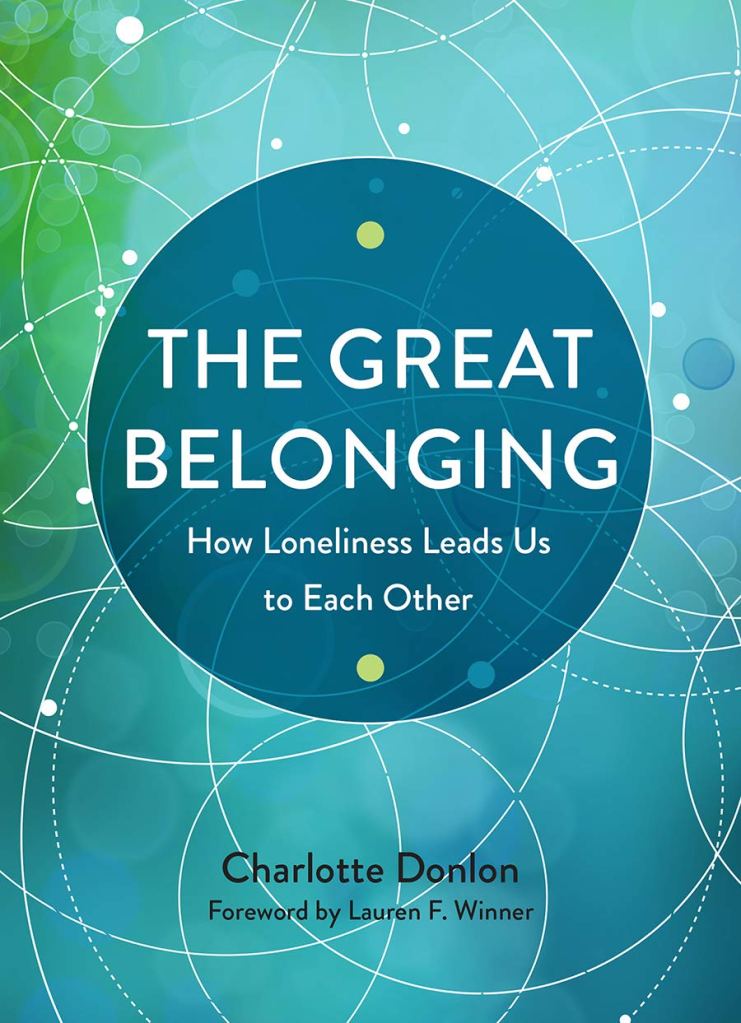
New Book for the Contemplative Community! THE GREAT BELONGING by Charlotte Donlon

This week I’m delighted to introduce another book for our community: The Great Belonging: How Loneliness Leads Us to Each Other by Charlotte Donlon. This is a beautiful and hopeful exploration of loneliness from a Christian perspective. The book shows that sometimes loneliness can become an opportunity for what we all crave: closeness with God and others. Sometimes, it is part of the human condition because we are people of longing. I so appreciate Charlotte exploring a topic that’s so often been taboo. There is no shame in feeling lonely. It just means that we’re human and need one another.

Below, I’ve included an excerpt from Charlotte’s book. First, she has a few words of introduction.


The Great Belonging: How Loneliness Leads Us to Each Other has five sections: Belonging to Ourselves, Belonging to Each Other, Belonging to Our Places, Belonging through Art, and Belonging to God. I believe our primary belongings are to ourselves, others, and God. But other things, such as places and art, can enhance our main belongings. The excerpt below, “Visio Divina” is from the Belonging through Art section. It describes encounters with three works of art that deepened my belongings to myself and to God. –Charlotte Donlon

Visio Divina

When I walked into the Georgia O’Keeffe Museum in Santa Fe on a hot August afternoon, the first painting my attention turned toward was O’Keeffe’s Trees in Autumn. Most of the trees in this work are portrayed with flames of bright red, orange, and gold. A single green fir provides a touch of realism and stands as a stark contrast to the colorful ribbons of leaves on the more surreal deciduous trees. A background of lavender hills and blue sky, along with layers of crawling light, create that familiar feeling of being outside in the hour or so before the sun begins to set.            

I was attending a weeklong arts and writing workshop, and participants had gathered at the museum with the workshop’s chaplain for visio divina. The spiritual practice of visio divina is similar to lectio divina, when readers take time to interact slowly and deeply with Scripture through meditation and prayer. While lectio divina is the practice of divine reading, visio divina is the practice of divine seeing. As the Upper Room website explains, “visio divina invites one to encounter the divine through images.” Prayerfully beholding a photograph, an icon, a piece of art, or other visual representation provides an opportunity to experience God in unique and compelling ways.

I had practiced visio divina once before, but on this day in Santa Fe, I devoted more time to divine seeing. The chaplain had instructed us to stand before two or three of O’Keeffe’s paintings for several minutes and open to what God might have for us through our engagement with the artist’s work as we lingered, looked, and listened.

After several minutes, I left Trees in Autumn and moved through the gallery until another piece stood out to me. Autumn Trees–The Maple is also a colorful painting, but it’s more muted than Trees in Autumn. It has more white space, some gray, a touch of gloom. The shape and outline of the tree are difficult to discern. It’s an idea of a tree, a tree that is only a tree because the artist said it is.

The painting brought to mind the landscape of late fall, when winter is near and temperatures are cool. Again, I stood with the painting for several minutes and tried to interpret my inner response. I enjoyed the stillness and the process of giving my attention to the art. O’Keeffe’s work invited me to enter a realm that wasn’t affected by the news of the day, my personal anxieties, or unknown passersby. I entered this dimension and considered how the painting might see me. Was it a mirror that reflected an image of my soul? If so, what was it trying to show me? I stood in front of this painting, asking questions and waiting for answers. After the energy of my asking and waiting fizzled, I wandered away to see what else there was to see.

I arrived in a larger gallery and glanced back over my right shoulder. In the corner was a dark painting that I was immediately drawn to. I sat down on the end of a nearby bench and observed this third piece for several minutes. Black Place III has shades of gray, black, and white mountainous shapes. A muted yellow crack or narrow stream makes a crooked path down a portion of the middle of the work. Red shadows splash near the bottom. I eventually discovered two eyes in the middle of the painting. Or the suggestion of two eyes. The painting was dark. Very dark. And I loved it.

After I recognized I was more drawn to this piece than I had been to the other two, I began to berate myself. “Of course I prefer the dark painting. Why do I always lean toward the hard, sorrowful, sad things? Why am I like this? Why do I feel most comfortable in the murkiness?” I stayed with these questions and tried to not shy away from the feelings they produced. Then my thoughts were interrupted by this observation: “But you were drawn to colorful paintings, too. You were drawn to colorful paintings first.”

Black Place III was a mirror, and it reflected my doubts back to me. Its eyes might have even been looking at me. The painting ignited questions—asked with a tone of judgment and ridicule— about the essence of who I am. I’ve long been aware of my tendencies to stray toward hard things, to acknowledge and make room for brokenness. But my harsh views about the truth of who I am only surfaced after I practiced visio divina in the Georgia O’Keeffe Museum. At first it was uncomfortable to realize I was judging myself, but I was also thankful to see my inner world with greater clarity. Then, when I noticed the interruption and saw more of the truth—I was also drawn to color and brightness and lightness— my soul settled. It was as though God were telling me, “You are all of who I created you to be.

From The Great Belonging: How Loneliness Leads Us to Each Other by Charlotte Donlon copyright © 2020 Broadleaf Books. Reproduced by permission.

***

Charlotte Donlon is a writer, spiritual director, and podcast host. She holds an MFA in creative writing from Seattle Pacific University where she studied creative nonfiction. Her work has appeared in The Washington Post, Christianity Today, Catapult, The Millions, Mockingbird, Christ and Pop Culture, and elsewhere. Her first book, The Great Belonging: How Loneliness Leads Us to Each Other, will be published by Broadleaf Books in November 2020. Learn more about Charlotte, her writing, and her work at charlottedonlon.com. You can connect with her on Twitter and Instagram at @charlottedonlon.

WEEKLY PRAYER: St. Augustine

St. Augustine (354-430) wrote this prayer to the Holy Spirit:

Breathe in me, O Holy Spirit,
That my thoughts may all be holy.
Act in me, O Holy Spirit,
That my work, too, may be holy.
Draw my heart, O Holy Spirit,
That I love but what is holy.
Strengthen me, O Holy Spirit,
To defend all that is holy.
Guard me, then, O Holy Spirit,
That I always may be holy.

Source

FRIDAY FAVORITES FOR PRAYER AND WRITING

Welcome to Friday Favorites! It’s been quite a week, hasn’t it? Prasanta Verma and I hope you will find some peace and solace in these posts. Prayer, poetry, and positivity — it’s all here. 😉

Be well and be blessed.

***

Prayer for the Christian Political Other via Gena Thomas (a good prayer for election week)

A Lesson in Meandering via Jeff Grills (enjoy this poem on the serpentine path of life)

Self-Care in Grief and Hard Times via Lisa Appelo (ideas for biblical self-care, which is always rooted in God)

Unmasked via Nichole Woo (what do our metaphorical masks hide?)

The Pastoral is Political: Poetry as Cure for Being Gaslit via Melanie Weldon-Soiset (reading and writing poetry can be healing acts)

30 Positive Words for November via Roz Andrews (one positive word to contemplate for each day this month)


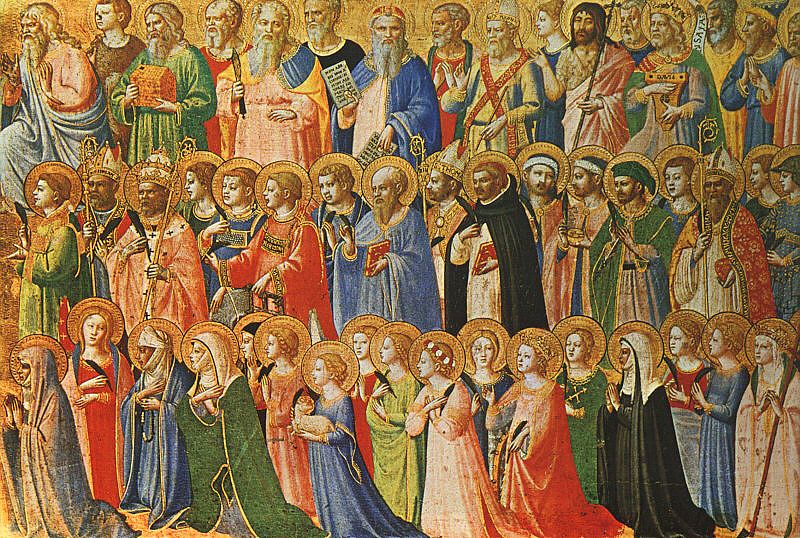
On Election Day, Remember the Saints

Today is Election Day, and many are anxious. I am. Maybe you are, too.

I find it provocative that this year, Election Day follows right on the heels of All Souls Day and All Saints Day. On those days, we commemorate the saints and hold close the memory of the departed. We are reminded that we’re part of a big and beloved community.

Today, as we steer our country and watch with baited breath, we need more than ever to have that community with us. To know, as we wait in our isolated pandemic pods, that we’re not alone. That is why I relentlessly study the Christian mystics, saints, artists, and pilgrims of old. For me, history is spiritual formation because it grounds me in something bigger than I am. I am part of a great cloud of witnesses with whom I am scudding across the sky toward home.

So, although All Saints Day may be over, I declare this to be All Saints WEEK. And on this Election Day, I urge you: remember the saints. The ones you read about in Scripture and spiritual texts from the past and present. They will guide and ground you.

Remember the saints. The ones who paved the way for the church and our country. The ones you love who have already gone home, perhaps far too soon. Their work and their memory is with you.

Remember the saints. The ones in your home. The ones you encounter on the street or on your Twitter and Facebook timelines. The ones who feel alone and anxious and vulnerable this week. They need you.

Remember the saints. Check in on them. Love them. Feel them near you. We are all—past and present, dead and living—in the same boat sailing toward a distant horizon. Or, to use a different image, “we’re all just walking each other home (Ram Dass).”

WEEKLY PRAYER: Martin Luther King, Jr.

Yesterday, Nov. 1, was All Saints Day, when we commemorate all the saints of the church, those that are known and those that are unknown. In our prayer for the week, Martin Luther King, Jr. gives thanks for the saints and foreparents that have preceded us in the faith.

***

Oh God, our gracious, heavenly Father, we thank Thee for the creative insights in the universe. We thank Thee for the lives of great saints and prophets in the past, who have revealed to us that we can stand up amid the problems and difficulties and trials of life and not give in. We thank Thee for our foreparents, who’ve given us something in the midst of the darkness of exploitation and oppression to keep going. And grant that we will go on with the proper faith and the proper determination of will, so that we will be able to make a creative contribution to this world and in our lives. In the name and spirit of Jesus we pray. Amen.

Source

FRIDAY FAVORITES FOR PRAYER AND WRITING

Welcome to Friday Favorites! This week, Prasanta Verma and I were struck by the number of posts and podcasts that wisely and gently help us through difficult times. And, dear friends, you may have noticed that the times are difficult. We urge you to keep your hope and faith alive. The words below may help — soak up these writers on finding God and tranquility in disruption and sorrow.

Be well and be blessed.

***

A Liturgy for Embracing Both Joy & Sorrow via The Rabbit Room (a liturgy that feels particularly appropriate for this time)

Open or Closed: Welcoming an Expansive View of God via Gem Fadling (an Unhurried Living podcast episode that walks us through a practice to cultivate a greater vision of God during overwhelming times)

Searching for Certainty: Finding God in the Disruptions of Life with Shelly Miller via Sally Clarkson (how difficult times can become purposeful times of spiritual growth)

Poems for All Saints Day via C. Christopher Smith (from the Englewood Review of Books archives, some poems by and about the saints)

Bookish, Tranquil, and Wise via Joy Clarkson (in this podcast episode, Alan Jacobs discusses how to recover our tranquility by reading old books)

Hilary Mantel on How Writers Learn to Trust Themselves via Literary Hub (Mantel talks about routines, early readers, and trusting your writerly self)


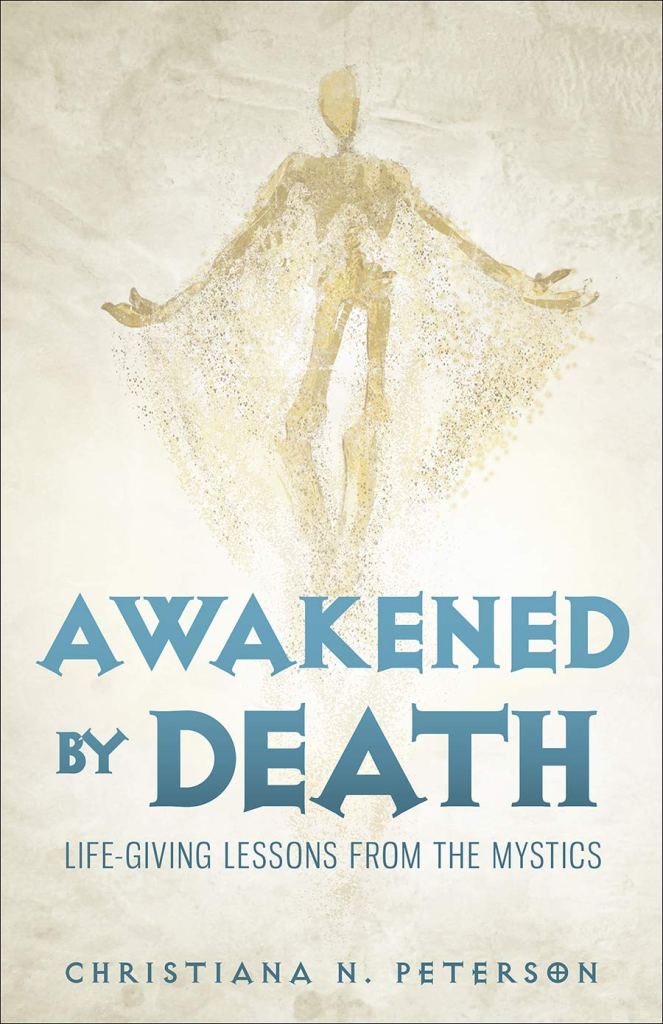
A New Book for the Contemplative Community: Awakened by Death by Christiana Peterson

I’m delighted to introduce a new book for the contemplative community! Yesterday, author Christiana Peterson released her new book, Awakened by Death: Life-Giving Lessons from the Mystics. This beautiful book offers stories and wisdom from history’s mystics to helps us reclaim a healthy engagement with our mortality. You will find a lot of hope in this book; it’s one that our death-averse culture desperately needs.

I also love the way that Christiana tells us her own stories and fears. In the excerpt below, she begins with a childhood story and shows us how love leads us to care for others’ wounds. This in turn can help us face our own wounds and our mortality.


***

When I was a child, I developed a Band-Aid phobia. According to my mom, this fear reached its pinnacle when I stubbornly refused to keep the Band-Aids on that she’d applied to the oozing blisters on my feet, caused by those plastic jelly shoes from the 1980s. She didn’t understand why I would rather keep the shoes on and let my blisters continue to break open and pustulate than wear a Band-Aid.

Even now, the thought of used Band-Aids mashed into the dirt of the playground, the ones that flapped off a child’s ankle during play, or soiled bandages in the dusty corners of the public restroom makes me want to gag.

Maybe Band-Aids remind me of wounds. Wounds can be shocking to see and smell, visceral reminders that all those bloody, sinewy, bony parts peeking out underneath the skin are indeed mortal. I remember studying the Black Death in school; the descriptions of the wounds that accompanied such a horrible sickness dug their way into my psyche. Bursting boils or buboes the size of oranges on the groin or lymph nodes, symptoms that tortured the lungs or the blood, aches and pains across the eyes and the head.

The people of the Middle Ages were well acquainted with wounds. They didn’t have the luxury of advanced medicine or science; doctors only had cursory knowledge, and their treatments often did more harm than good. Though they didn’t always understand the science behind what caused bodies to die so violently with the Black Death or other illnesses, they saw what the skin of their failing children and parents and spouses looked like when boils bubbled and burst. They heard the sound of their cries and the agony of the silences when the cries stopped. Their acquaintance with disease and death was unavoidable; pain management a fiction.

For Saint Francis and Saint Catherine, an acquaintance with wounds and decay helped them approach the suffering of others. Saint Francis famously made peace with others’ wounds. Growing up in a wealthy family, he was revolted (as many people were) by the lepers who were forced to remain on the edges of society. Wealth did for Francis what it has always done for those with power and resources: it allowed him to remain aloof from the suffering of others. As much as it was possible for a person in thirteenth-century Europe to avoid suffering, Francis did in his youth.

But his treatment of lepers became a marker of the blossoming of his relationship with God. And eventually, the leprosy that had formerly disgusted him became the evidence of his transformation.

One spring afternoon, Francis slid off his horse, reached out to a leper on the road, and kissed him. Only months later, he heard the voice of Jesus in the church at San Damiano, and he moved toward a life of poverty, giving away all of his possessions and living with lepers.

Saint Catherine of Siena had a vision of Jesus in which she kissed and licked his wounds. This graphic image takes us from our tendency to spiritualize the passage in 1 Peter that says of Jesus, “by his wounds you have been healed.” Catherine seemed, like many mystics, to believe not only in the spiritual but physical power of Christ’s wounds.

There is also a story of a prisoner named Niccolo who was doomed for execution. By the time Catherine visited him in prison, he had already refused a priest and prayer. But Niccolo couldn’t resist Catherine’s charisma and contagious passion for God. When she finally got through to him, he begged her to become his confessor.

As Niccolo’s beheading approached, he pleaded with her not to leave him. Catherine followed him up the long walk to the execution platform, heard his prayers, and knelt to catch his head as it was severed from his body.

As grotesque as these images might seem to us—of Catherine of Siena with her mouth to a wound and catching a decapitated head—she was offering her presence in death and decay.

Though I’ve never licked a wound—gross—I have tended to my children’s wounds, hurts, and bodily fluids more times than I can count. I have cleaned up their vomit and feces, held bloody cuts closed with my hands. And while their wounds concerned me when they were severe, I can’t imagine being disgusted by them. Band-Aids don’t bother me when they have been on the cuts or wounds of my children.

Because I desperately love my children, even the unlovely parts of them are dear to me.

Even so, loving them can be challenging. But it is harder still to love others, especially those who might, at first glance, seem unlovable. Love has to be learned, tended, and nurtured if it is to be deep and lasting. Love expects us to care for the wounds of another, not just spiritually and emotionally but physically.

Saint Francis loved the wounds of others, but first he had to come to terms with his own wounds. Like all of us, he had to acknowledge that there were unlovely things about him too. He mourned his own weakness, and his love for others became so deep that he literally took on their wounds. Some say that the stigmata on his hands, feet, and side that oozed and never fully healed were actually leprous.

Becoming attuned to the things that disgust us and to the things that we fear is not just a good intellectual exercise. The ways we approach the things that horrify and disgust us might show the ways we look at death. The difficult and painful work of facing death can actually be an act of love.

*Excerpt from Awakened by Death: Life-Giving Lessons from the Mystics by Christiana Peterson copyright © 2020 Christiana Peterson admin. Broadleaf Books. Reproduced by permission.

***

Christiana N. Peterson is the author of Mystics and Misfits: Meeting God through St. Francis and Other Unlikely Saints. Her writing on the mystics, community, the spiritual disciplines of motherhood, and death has been featured in Christianity Today, Art House America, The Christian Century, and Bearings Online. She’s a regular contributor to Good Letters, an Image Journal blog. She lives in Ohio with her husband and their four children.